Home / Blog / 10 Orthopedic Warning Signs You Shouldn’t Ignore
August 14, 2020
Blog
Share At:
Listen Article
Why Listening to Your Bones and Joints Matters
Our bones, joints and muscles carry us through every moment of the day, yet we rarely think about them until something goes wrong. The trouble is that many orthopedic problems begin quietly, with small signs that are easy to brush aside as tiredness or age. In over two decades of orthopedic practice in Ahmedabad, I have seen how paying attention to these early warning signs can prevent years of pain and, in many cases, avoid the need for major surgery.
Here are ten orthopedic warning signs you should never ignore. Recognising them early and consulting an orthopedic specialist in Ahmedabad at the right time can protect your mobility and your quality of life for years to come.
Occasional aches are normal, but joint pain that lasts for weeks, or keeps returning, is not something to ignore. Persistent pain in the knees, hips, shoulders or other joints can be an early sign of arthritis or joint damage. The earlier it is evaluated, the more treatment options are available, often without surgery.
Sign 2: Stiffness That Limits Movement
Stiffness that makes it hard to bend, straighten or move a joint freely, especially in the morning, can point to an underlying joint problem. When stiffness starts to limit everyday movements like walking or climbing stairs, it is time to have it checked by an orthopedic doctor.
Sign 3: Swelling Around a Joint
Swelling around a joint that does not settle with rest may indicate inflammation, injury or arthritis. Persistent or repeated swelling should never be ignored, as it often signals a problem inside the joint that needs proper evaluation and care.
Sign 4: Difficulty Climbing Stairs or Walking
If climbing stairs, walking or standing up has become painful or difficult, your joints may be telling you something important. This is one of the most common early signs of knee or hip problems, and addressing it early can prevent further damage.
Sign 5: Pain That Disturbs Your Sleep
Pain that wakes you at night or makes it hard to sleep is a sign that a joint or bone problem may be advancing. Pain at rest, rather than only during activity, often means the condition needs prompt medical attention.
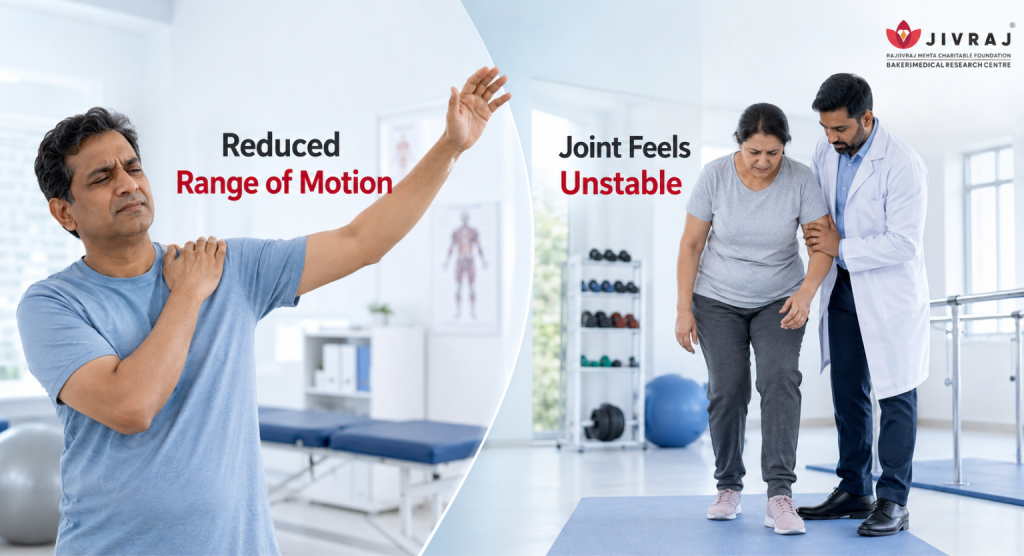
Sign 6: Reduced Range of Motion
If you can no longer move a joint as fully as before, such as struggling to raise your arm or fully bend your knee, this reduced range of motion is a warning sign. It may indicate joint damage, and early treatment can help preserve your movement.
Sign 7: A Joint That Feels Unstable or Gives Way
A knee or ankle that feels like it might buckle or give way can signal ligament damage or joint weakness. This instability raises the risk of falls and injuries, so it should be evaluated by an orthopedic specialist without delay.
Sign 8: Recurring or Long Lasting Back Pain
Back pain that keeps returning or lingers for weeks should not be dismissed as ordinary strain. Persistent back pain can arise from spine or disc problems, and early assessment helps prevent it from worsening and affecting daily life.
Sign 9: Numbness, Tingling or Weakness
Numbness, tingling or weakness in the arms, hands, legs or feet may point to a nerve being compressed, sometimes related to the spine. These symptoms should be checked promptly, as early care can prevent long term nerve problems.
Client Speaks
“I recently visited the Health Checkup Department at Dr. Jivraj Mehta Hospital, and I must say, I am thoroughly impressed with the entire experience. From the moment I arrived, the staff was welcoming, professional, and made me feel at ease. The checkup process was smooth and well-organized, with clear instructions provided every step of the way. The medical team was attentive, knowledgeable, and took the time to answer all of my questions, ensuring I fully understood the procedures and results. The facilities were clean, modern, and equipped with the latest technology, making me feel confident in the quality of care. I was especially appreciative of how efficient the process was, allowing me to complete all necessary tests without unnecessary wait times. Overall, the Health Checkup Department at Dr. Jivraj Mehta Hospital exceeded my expectations, and I would highly recommend it to anyone looking for comprehensive and reliable health checkup services.”
Rohan S -On Google
Sign 10: Pain or Difficulty After an Injury
Pain, swelling or difficulty moving that continues after a fall, sports injury or accident should always be evaluated. What seems like a simple sprain can sometimes be a fracture or ligament tear. Getting it checked ensures the injury heals correctly and does not cause long term trouble.
Why Early Orthopedic Care Matters
The common theme across all these signs is simple: early action protects your mobility. Many orthopedic conditions, when caught early, can be managed with medication, physiotherapy or lifestyle changes, avoiding the need for surgery. Ignoring the signs, on the other hand, often allows problems to worsen until treatment becomes harder. Listening to your body and seeking timely care is the wisest choice for lifelong movement.
When Should You See an Orthopedic Specialist in Ahmedabad?
If any of these warning signs sound familiar, especially if they last more than a couple of weeks or affect your daily life, it is time to consult an orthopedic specialist. You should seek care promptly if you have:
Joint pain or swelling that does not settle
Stiffness or reduced movement affecting daily tasks
Pain that disturbs your sleep
A joint that feels unstable or gives way
Numbness, tingling or weakness in the limbs
Early evaluation often means simpler, more effective treatment and a faster return to comfortable movement.
Expert Orthopedic Care at Dr. Jivraj Mehta Hospital
At Dr. Jivraj Mehta Hospital, our experienced orthopedic team helps patients across Ahmedabad detect and treat bone and joint problems early. From accurate diagnosis to physiotherapy, minimally invasive procedures and advanced joint surgery, we offer complete orthopedic care under one roof, delivered with the compassion and personal attention every patient deserves. If any of these warning signs sound familiar, our specialists are here to help you understand what is happening and what to do next.
Simple Habits to Keep Your Bones and Joints Healthy
Prevention is always better than treatment, and a few daily habits can keep your bones and joints strong for years:
Stay active with regular, joint friendly exercise
Maintain a healthy weight to reduce stress on the joints
Eat a balanced diet rich in calcium and vitamin D
Practise good posture while sitting, standing and lifting
Warm up before exercise and avoid sudden overstraining
Get persistent aches checked early rather than ignoring them
These simple steps, combined with timely attention to any warning signs, help protect your mobility and keep you moving comfortably throughout life.
When should I see an orthopedic doctor for joint pain?
You should consult an orthopedic doctor if joint pain lasts more than a couple of weeks, keeps returning, or affects daily activities like walking or climbing stairs. Pain with swelling, stiffness, or that disturbs your sleep also needs evaluation. Early consultation often allows simpler treatments such as medication or physiotherapy before the problem worsens. At Dr. Jivraj Mehta Hospital, our orthopedic team offers complete evaluation and care in Ahmedabad.
Are these warning signs always serious?
Not always, but they should never be ignored. Some signs may point to minor, easily treated problems, while others can indicate arthritis, joint damage or nerve issues that benefit from early care. The safest approach is to have persistent or worsening symptoms evaluated by an orthopedic specialist. Early assessment gives you the clearest picture and the widest range of treatment options, often avoiding the need for major surgery later.
Can orthopedic problems be treated without surgery?
Yes, in many cases. When caught early, a large number of orthopedic conditions can be managed with medication, physiotherapy, lifestyle changes or minimally invasive treatments. Surgery is usually considered only when these approaches no longer provide relief. This is exactly why early evaluation matters so much, as it opens up simpler treatment options. Your orthopedic specialist will always aim for the least invasive effective treatment for your condition.
Is back pain an orthopedic problem?
It often is. Persistent or recurring back pain can arise from problems in the spine, discs or surrounding muscles, all of which fall within orthopedic and spine care. While occasional back strain is common, pain that lingers for weeks or is accompanied by numbness, tingling or leg weakness should be evaluated. Early assessment helps identify the cause and prevents the problem from worsening over time.
What happens during an orthopedic evaluation?
An orthopedic evaluation usually begins with a discussion of your symptoms and a physical examination of the affected area. Your specialist may recommend imaging such as an X-ray or scan to see the bone and joint clearly. Based on the findings, a personalised treatment plan is created, which may include medication, physiotherapy or, if needed, further procedures. The aim is always to relieve pain and restore comfortable movement.
Your bones and joints do send signals when something is wrong. Paying attention to these warning signs and acting in time can protect your mobility, prevent unnecessary pain and often avoid major treatment. When in doubt, it is always better to get checked.
If you are noticing any of these warning signs, our experienced orthopedic team at Dr. Jivraj Mehta Hospital is here to help you move comfortably again.
Appointments and Emergency: Call +91-79-26636363 to consult our orthopedic specialists at Dr. Jivraj Mehta Hospital, Ahmedabad.







 WhatsApp
 Call Now!