
Most of us think about the heart or the waistline when we worry about food, but rarely about the kidneys. Yet your kidneys quietly process everything you eat and drink, removing the waste and balancing the minerals that food leaves behind. Over many years of treating kidney patients in Ahmedabad, I have learned that some very ordinary foods, the kind found in almost every kitchen, can put surprising strain on the kidneys when eaten in excess.
This does not mean these foods are dangerous for everyone. For a person with healthy kidneys, balance is the key. But for someone at risk of kidney disease, or already living with it, the same foods can become a real problem. To keep things clear and useful, each food below includes separate guidance for two groups: people with healthy kidneys, and people who already have kidney disease.
An important note: this article is for general awareness only. If you have kidney disease, your safe food limits depend on your stage and your blood test results, so always follow the personalised advice of your nephrologist or kidney dietitian rather than a general list.
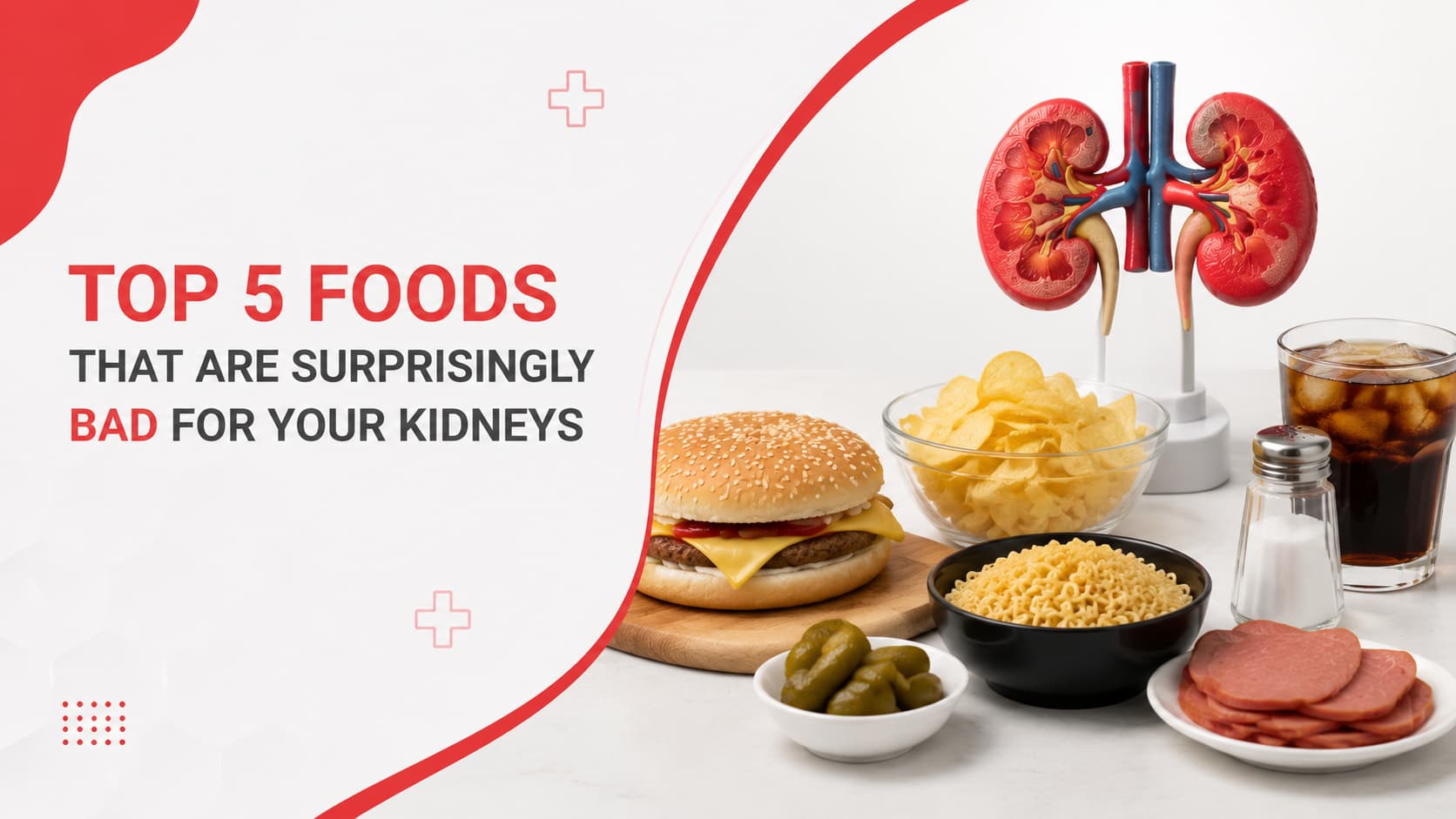
1. Salt and Salty Packaged Foods
Salt is the most common kidney stressor of all, and most of it does not come from the salt shaker but from packaged and processed foods. Namkeen, chips, papad, pickles, instant noodles, sauces and ready to eat snacks are loaded with hidden sodium. Excess salt raises blood pressure and forces the kidneys to work harder to remove the extra fluid, and high blood pressure is one of the leading causes of kidney damage.
If your kidneys are healthy: keeping salt moderate protects your blood pressure and lowers your long term kidney risk. Cooking fresh food at home and limiting packaged snacks is enough for most people.
If you have kidney disease: sodium control becomes much more important, as your kidneys struggle to clear it. Your dietitian will give you a specific daily limit suited to your condition.
2. Processed and Red Meats
Red meat and processed meats such as sausages and cold cuts are high in animal protein and, in the processed form, in salt and preservatives too. Breaking down large amounts of protein creates more waste for the kidneys to filter, and over time this can add to their workload. Processed meats carry the added burden of high sodium and phosphate additives.
If your kidneys are healthy: moderate amounts of meat are fine as part of a balanced diet. The concern is mainly with very high, regular intake.
If you have kidney disease: protein often needs to be carefully measured, not simply cut. Too much strains the kidneys, but too little harms nutrition, so the right amount must be set by your nephrologist.
3. Colas and Dark Sodas
Dark coloured fizzy drinks are an underestimated kidney stressor. Besides sugar, many contain phosphoric acid, a form of phosphorus that the body absorbs very easily. High phosphorus levels can disturb the balance of minerals in the blood and, over time, affect the bones and kidneys. Regular cola intake has also been linked in studies to a higher risk of kidney problems.
If your kidneys are healthy: occasional consumption is unlikely to cause harm, but daily cola drinking is a habit worth reducing for both kidney and overall health.
If you have kidney disease: these drinks are best avoided, as damaged kidneys cannot clear excess phosphorus well. Water, fresh lime water or plain options are far safer choices.
Our Other Specialties
Onco Surgery & Treatment4. Certain High Potassium Foods
This is the most surprising entry, because the foods involved are genuinely healthy. Bananas, potatoes, tomatoes, oranges, coconut water and many dried fruits are rich in potassium, an essential mineral. For most people this is a benefit. But when the kidneys are not working well, they cannot remove excess potassium, and high potassium levels can become dangerous, even affecting the heart.
If your kidneys are healthy: these foods are good for you and should remain part of your diet. There is no reason to avoid them.
If you have kidney disease: potassium may need to be limited depending on your blood levels. This is exactly why self restriction is risky, as cutting healthy foods without testing can do more harm than good. Only your nephrologist can tell you what is safe.
5. Excess Painkillers and Supplement Powders
Strictly these are not foods, but they are swallowed so casually that they belong on this list. Common painkillers taken frequently for headaches or body pain can quietly injure the kidneys over time. The same applies to high dose protein powders and certain herbal or unregulated supplements that many people take without medical advice, assuming that natural means safe.
If your kidneys are healthy: occasional use of painkillers as directed is generally fine, but regular long term use without advice should be avoided.
If you have kidney disease: many painkillers and supplements can be harmful and must only be taken under medical supervision. Always tell your doctor about every medicine and supplement you use.
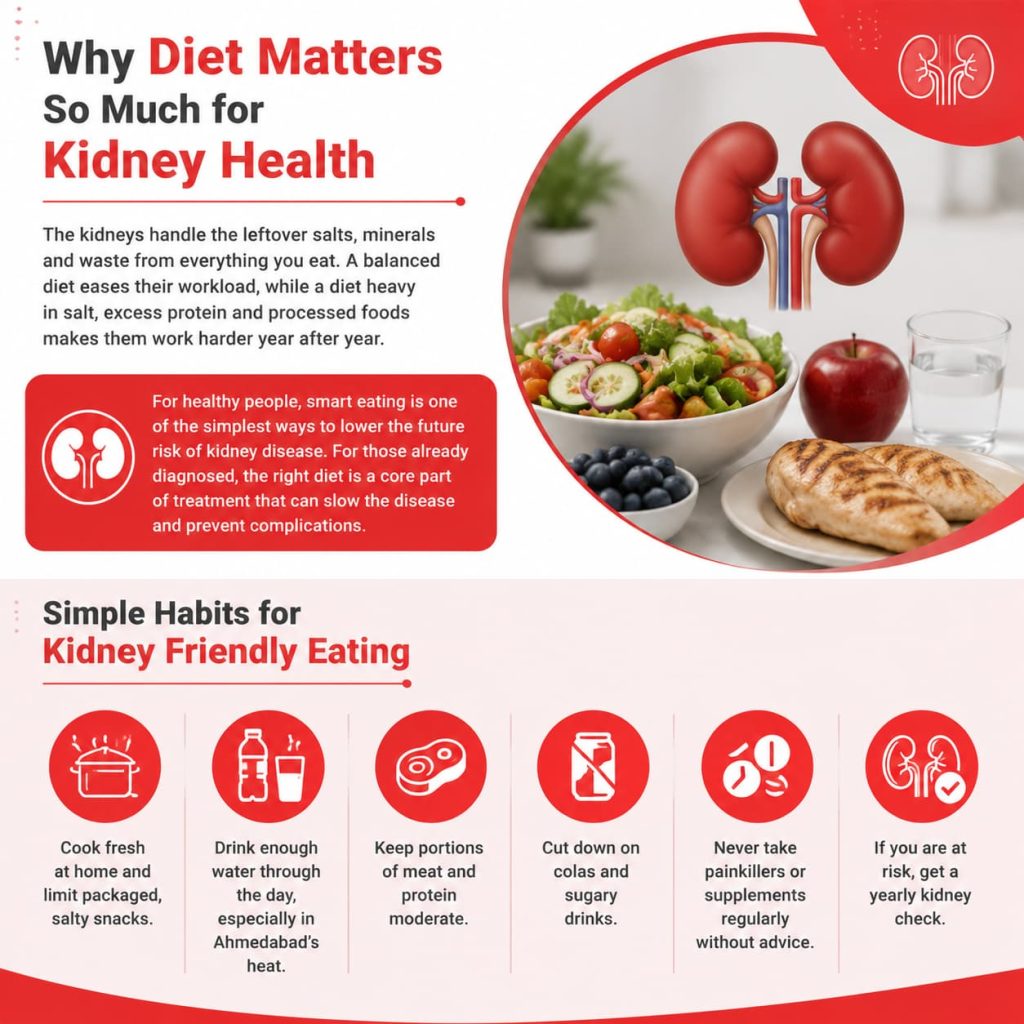
Why Diet Matters So Much for Kidney Health
The kidneys handle the leftover salts, minerals and waste from everything you eat. A balanced diet eases their workload, while a diet heavy in salt, excess protein and processed foods makes them work harder year after year. For healthy people, smart eating is one of the simplest ways to lower the future risk of kidney disease. For those already diagnosed, the right diet is a core part of treatment that can slow the disease and prevent complications.
Simple Habits for Kidney Friendly Eating
You do not need a complicated diet to support your kidneys. A few steady habits make a real difference:
- Cook fresh at home and limit packaged, salty snacks.
- Drink enough water through the day, especially in Ahmedabad’s heat.
- Keep portions of meat and protein moderate.
- Cut down on colas and sugary drinks.
- Never take painkillers or supplements regularly without advice.
- If you are at risk, get a yearly kidney check.
Personalised Kidney Care at Dr. Jivraj Mehta Hospital
Every person’s kidneys are different, and so is the diet that suits them. At Dr. Jivraj Mehta Hospital, our nephrology team works closely with patients across Ahmedabad to assess kidney function and, where needed, guide them on safe, personalised dietary choices alongside their treatment. If you have kidney disease or are at risk, our specialists can help you understand exactly which foods to enjoy, limit or avoid, based on your own test results rather than a general list.
Our Other Specialties
Heart Care ServicesFrequently Asked Questions
Are these foods bad for everyone's kidneys?
No. For people with healthy kidneys, these foods are usually fine in moderation. They become a concern mainly when eaten in excess, or for people who are at risk of or already living with kidney disease.
Should I stop eating bananas and tomatoes to protect my kidneys?
If your kidneys are healthy, no. These are nutritious foods you should continue to enjoy. Potassium only needs limiting for some kidney patients, based on blood tests. Never cut healthy foods without your doctor's advice.
Can a poor diet alone cause kidney disease?
Diet alone is rarely the only cause, but a diet high in salt, processed foods and excess protein adds to the risk over many years, especially alongside diabetes or high blood pressure. A balanced diet is an important protective habit.
Is drinking cola really harmful to the kidneys?
Occasional cola is unlikely to harm healthy kidneys, but regular intake of dark sodas adds sugar and phosphorus that can strain the kidneys over time. For kidney patients, these drinks are best avoided.
Who should I consult for a kidney friendly diet in Ahmedabad?
A nephrologist, along with a kidney dietitian, can create a diet plan based on your specific kidney function. At Dr. Jivraj Mehta Hospital, our nephrology team offers this personalised guidance for patients across Ahmedabad.
Eat Wisely and Protect Your Kidneys
The foods on this list are not villains. The real message is balance and awareness. For healthy people, moderation keeps the kidneys strong for years to come. For those with kidney disease, the right food choices, guided by a specialist, are a powerful part of staying well.
If you have kidney disease or any risk factors, do not guess your diet. Let an expert guide you based on your own health.
Appointments and Consultation: Call +91-79-26636363 to consult our nephrologists at Dr. Jivraj Mehta Hospital, Ahmedabad.