Blog

Title Image

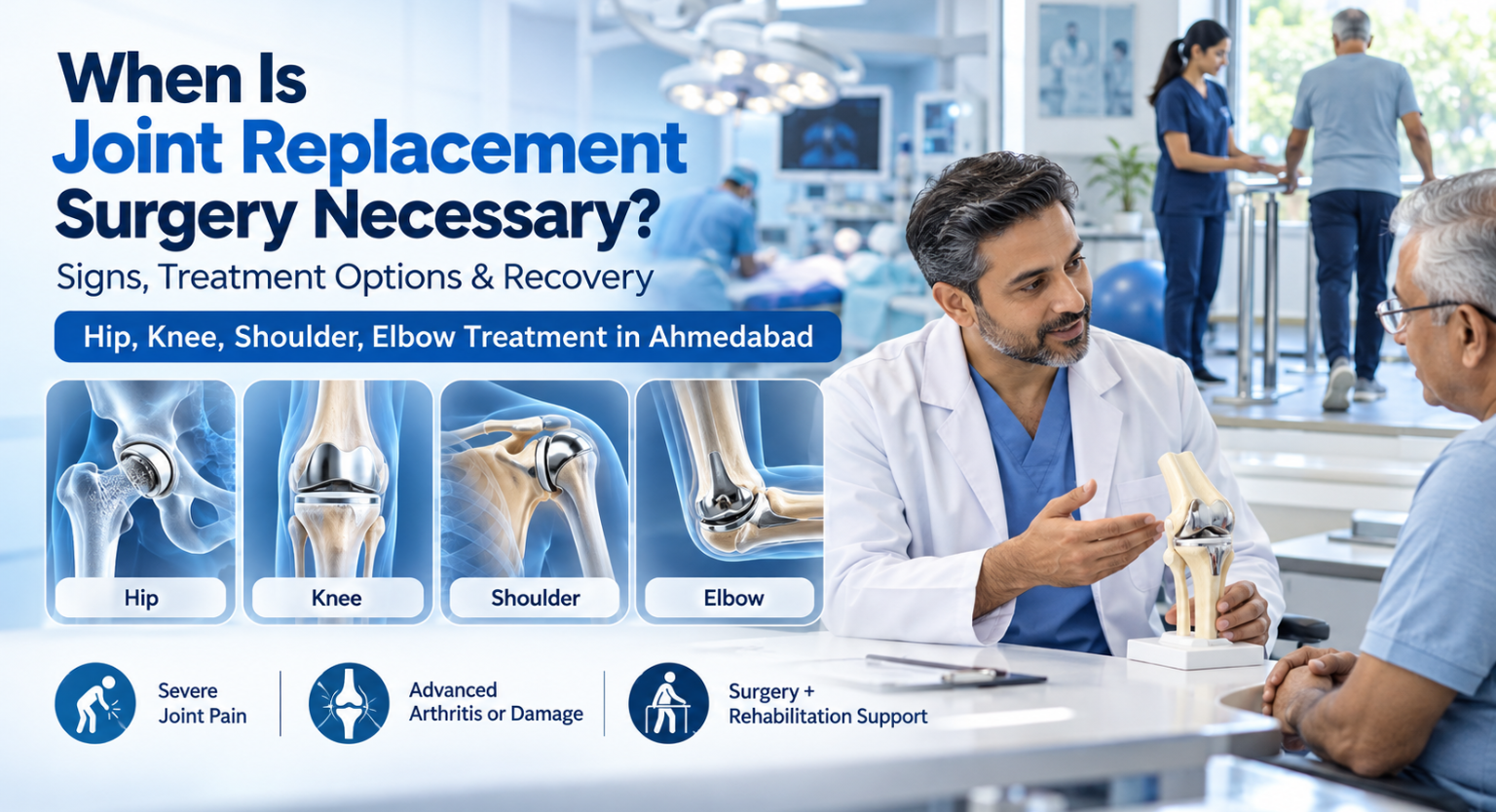
When Is Joint Replacement Surgery Necessary? Signs, Treatment Options and Recovery

Home  /  Blog   /  When Is Joint Replacement Surgery Necessary? Signs, Treatment Options and Recovery
Share At:
Google AI ChatGPT Grok Perplexity

Listen Article

Hip, Knee, Shoulder, Elbow Treatment in Ahmedabad:

To educate patients about joint replacement surgery, explain when knee, hip, shoulder or elbow replacement may be recommended, and highlight the orthopaedic services, surgical facilities and rehabilitation support available at Jivraj Healthcare, Ahmedabad.

Joint replacement surgery can help patients with severe joint damage, arthritis or certain injuries manage pain and improve mobility when non-surgical treatments are no longer sufficient. Procedures such as total knee replacement (TKR), total hip replacement (THR), shoulder replacement and elbow replacement involve replacing damaged joint surfaces with artificial components. The appropriate procedure depends on the patient’s condition, symptoms, overall health and treatment goals. At Jivraj Healthcare in Ahmedabad, orthopaedic services include knee, hip, shoulder and elbow replacement, supported by personalized treatment planning, surgical facilities and post-operative rehabilitation.

What Is Joint Replacement Surgery and When Is It Needed?

Joint replacement surgery is an orthopaedic procedure in which damaged portions of a joint are replaced with artificial components called implants. It may be recommended when cartilage damage, arthritis, a severe injury or another joint condition causes persistent pain and restricts everyday activities.

Healthy joints allow bones to move smoothly. When the protective cartilage deteriorates, movement can become painful and stiffness may develop. In advanced cases, even routine activities such as walking, climbing stairs, getting out of a chair or lifting the arm can become difficult.

Doctors generally consider non-surgical treatments first, depending on the condition. These may include physiotherapy, medication, activity modification and other appropriate treatments. When these measures do not provide sufficient relief, an orthopaedic specialist may assess whether joint replacement surgery in Ahmedabad is an appropriate option.

The decision is individualized and depends on clinical examination, imaging findings, medical history and the impact of symptoms on quality of life.

Call Now for Instant Assistance!
Call Call Now

What Conditions May Require Knee or Hip Replacement Surgery?

Joint replacement may be considered for different conditions affecting the knee, hip, shoulder or elbow. Osteoarthritis is a common reason for replacement, but some severe injuries and other joint disorders may also lead to surgical treatment.

Symptoms that warrant an orthopaedic consultation include:

  • Persistent joint pain that interferes with daily activities
  • Stiffness or reduced range of motion
  • Difficulty walking, standing or climbing stairs
  • Pain that continues despite appropriate non-surgical treatment
  • Joint deformity or significant functional limitation

An orthopaedic specialist can evaluate the cause of these symptoms and discuss suitable treatment options.

Total Knee Replacement Surgery: Restoring Mobility and Joint Function

Total knee replacement (TKR) is a surgical procedure in which damaged joint surfaces are replaced with artificial components. It is commonly considered for patients with advanced knee arthritis, significant cartilage damage or certain injuries that have severely affected knee function.

People with advanced knee problems may experience pain while walking, difficulty climbing stairs, stiffness after sitting and reduced ability to perform everyday activities.

During knee replacement surgery, the surgeon removes damaged joint surfaces and positions artificial components to restore the joint’s function. The surgical approach and implant selection depend on the patient’s anatomy, condition and clinical requirements.

After surgery, physiotherapy plays an important role in recovery. A supervised rehabilitation programme may include gentle movement, muscle-strengthening exercises, walking practice and gradual improvement in knee flexibility.

Patients considering knee replacement surgery in Ahmedabad should consult an orthopaedic specialist to understand the expected benefits, potential risks, recovery process and available treatment alternatives.

Total Hip Replacement Surgery for Hip Arthritis and Joint Damage

Total hip replacement (THR) involves replacing damaged parts of the hip joint with artificial components. It may be recommended for advanced hip arthritis, certain hip fractures or other conditions that cause significant pain and functional limitations.

Hip joint damage can make walking, sitting, standing and putting on footwear difficult. Some patients also experience stiffness and discomfort during routine movement.

During hip replacement surgery, the damaged portions of the joint are replaced with prosthetic components designed to support movement. The procedure and post-operative plan depend on the underlying condition, bone quality and the patient’s general health.

Following hip replacement surgery, rehabilitation focuses on safe movement, strengthening the surrounding muscles and gradually returning to daily activities. Patients receive guidance on mobility, precautions and exercises according to their individual recovery plan.

At Jivraj Healthcare, patients can enquire about total hip replacement surgery and the orthopaedic assessment required to determine whether the procedure is suitable for them.

Shoulder Joint Replacement for Severe Shoulder Damage

The shoulder allows a wide range of arm movements, including reaching overhead, lifting objects and rotating the arm. Arthritis, severe joint damage and certain injuries can affect this movement and cause persistent discomfort.

Shoulder joint replacement surgery may be considered when severe arthritis, trauma or selected cases of rotator cuff damage significantly affect shoulder function and other treatments do not provide adequate relief.

The type of shoulder replacement depends on the condition of the joint, the rotator cuff and other clinical factors. An orthopaedic surgeon evaluates these factors before recommending a procedure.

Recovery generally involves a structured rehabilitation plan. Patients may initially need to protect the operated shoulder before gradually progressing through prescribed movement and strengthening exercises.

Individuals experiencing persistent shoulder pain, stiffness or restricted arm movement should seek an assessment to identify the cause and explore appropriate treatment options.

Elbow Replacement Surgery for Advanced Joint Problems

The elbow plays an important role in bending and straightening the arm and positioning the hand for daily activities. Severe arthritis, certain fractures and other forms of joint damage can make these movements painful or difficult.

Elbow replacement surgery involves replacing damaged joint surfaces with artificial components. It may be considered in selected patients when joint damage substantially affects function and other treatment options are unsuitable or unsuccessful.

The decision to perform elbow replacement depends on the extent of joint damage, bone quality, surrounding soft tissues, overall health and functional requirements. Recovery requires careful follow-up and adherence to the surgeon’s movement and activity recommendations.

Patients with severe elbow pain, stiffness or functional limitations can consult an orthopaedic specialist to determine whether joint replacement or another treatment approach is more appropriate.

Testimonial

“I had my mom’s health checkup here. I had a very smooth experience with all the tests and procedures. The staff here is friendly and supportive. They take care of everything once you are here.“

How Is the Right Joint Replacement Procedure Selected?

The choice between knee, hip, shoulder and elbow replacement depends on which joint is affected and the underlying cause of the symptoms.

An orthopaedic assessment may include a review of symptoms, physical examination, medical history and imaging investigations. The specialist also considers the patient’s general health, daily activities and expectations from treatment.

Joint replacement is not necessary for every person with arthritis or joint pain. Depending on the diagnosis, non-surgical treatment or a different surgical procedure may be more appropriate.

Before surgery, patients should discuss the expected benefits, possible complications, anaesthesia, implant options, recovery timeline and rehabilitation requirements with their treating team.

What to Expect During Joint Replacement Recovery and Rehabilitation?

Recovery after joint replacement surgery varies according to the joint involved, the patient’s health, the surgical procedure and individual progress.

Rehabilitation is an important part of treatment. A personalized programme may include:

  • Physiotherapy to improve movement and strength
  • Safe walking and mobility training
  • Exercises prescribed for the operated joint
  • Guidance on daily activities and movement precautions
  • Follow-up appointments to monitor recovery

Patients should follow the instructions provided by their orthopaedic team and avoid increasing activity too quickly. Recovery milestones differ between individuals, and the treating team can provide guidance on returning to work, driving and other activities.

At Jivraj Healthcare, physiotherapy and rehabilitation services support patients recovering from orthopaedic surgery and musculoskeletal conditions.

WhatsApp Us for Immediate Response
WhatsApp WhatsApp Us

Joint Replacement Surgery at Jivraj Healthcare, Ahmedabad

Patients looking for joint replacement surgery in Ahmedabad can enquire about the orthopaedic services available at Jivraj Healthcare.

The hospital provides total knee replacement, total hip replacement, shoulder replacement and elbow replacement surgery. Its orthopaedic services also cover trauma management, fracture care and other musculoskeletal conditions.

Jivraj Healthcare describes a patient-centred approach that includes individualized treatment planning, pre-operative assessment, surgical care, post-operative monitoring and rehabilitation support. Its facilities include a modular operating theatre with HEPA filtration, designed to support infection-control measures during surgery.

The appropriate treatment is determined after assessment by the orthopaedic team. Patients can visit the Orthopaedics and Joint Replacement Department to learn more about the available services and enquire about an appointment.

Joint Replacement Surgery for Arthritis

Joint replacement surgery may be an option for people whose severe joint damage, arthritis or certain injuries cause persistent pain and limit everyday movement. Knee, hip, shoulder and elbow replacement procedures address different joint problems, so treatment should be based on an individual medical assessment.

Alongside surgery, appropriate rehabilitation and follow-up care play important roles in recovery. Patients should discuss the available options, potential risks and expected outcomes with a qualified orthopaedic specialist.

Jivraj Healthcare in Ahmedabad provides orthopaedic and joint replacement services, supported by personalized treatment planning and rehabilitation facilities. Patients experiencing persistent joint pain or reduced mobility can contact the hospital to enquire about an orthopaedic consultation.

Frequently Asked Questions About Joint Replacement Surgery

When is joint replacement surgery recommended?

Joint replacement may be recommended when severe joint damage, arthritis or certain injuries cause persistent pain and restricted movement despite appropriate non-surgical treatment. The decision depends on individual clinical findings.

What is the difference between total knee replacement and total hip replacement?

Total knee replacement (TKR) replaces damaged surfaces of the knee joint, while total hip replacement (THR) replaces damaged parts of the hip joint. The procedure depends on the joint affected and the underlying condition.

Can shoulder and elbow joints also be replaced?

Yes. Shoulder and elbow replacement surgery may be considered for selected patients with severe arthritis, joint damage or certain injuries. An orthopaedic specialist determines whether replacement is appropriate.

How long does recovery after joint replacement take?

Recovery varies depending on the joint, procedure, general health and rehabilitation progress. Physiotherapy and follow-up care help guide the return to everyday activities.

Is physiotherapy necessary after joint replacement surgery?

Physiotherapy is an important part of recovery for many patients. It helps improve movement, strength and functional mobility according to an individualized rehabilitation plan.

Where can I consult an orthopaedic specialist for joint replacement in Ahmedabad?

You can contact Jivraj Healthcare, Ahmedabad, to enquire about orthopaedic consultations and joint replacement services through its Orthopaedics and Joint Replacement Department.

<< 1 >>