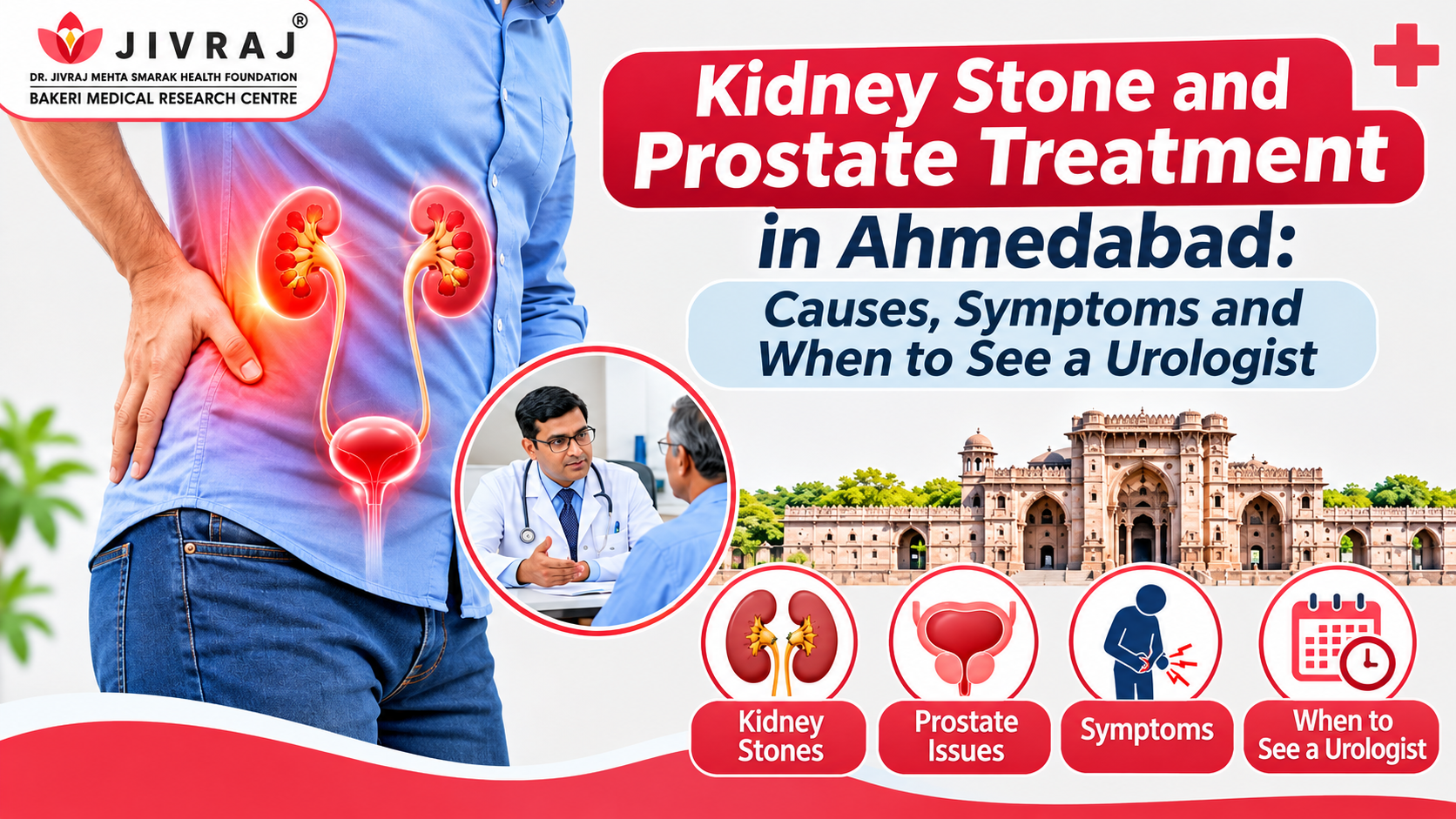
Kidney Stone and Prostate Treatment in Ahmedabad: Causes, Symptoms and When to See a Urologist
Home / Blog / Kidney Stone and Prostate Treatment in Ahmedabad: Causes, Symptoms and When to See a Urologist
November 12, 2026
Blog
Share At:
Listen Article
Kidney stones and prostate problems are among the most common reasons people consult a urologist in Ahmedabad. Early symptoms are often ignored because of hesitation, lack of awareness or the habit of taking a painkiller and moving on. This article is based on an episode of Navu Jivan Navo Naato, Tandurast Vaato, the health awareness podcast by Dr. Jivraj Mehta Hospital, in which writer and poet Ankit Trivedi spoke with urologist Dr. Neel Patel. It covers why stones form, how stone pain feels, which prostate symptoms men should not ignore, and how simple daily habits can support kidney health. At Jivraj Healthcare in Ahmedabad, patients can consult the urology department for these concerns.
Kidney stones are hard deposits of minerals and salts that form when urine becomes too concentrated or when the body does not process certain substances normally. Although they are commonly called kidney stones, they can be found anywhere in the urinary tract, including the kidney, the ureter (the tube that carries urine to the bladder) and the urinary bladder.
Dr. Neel Patel shares that a large share of patients seen in a urology OPD come with stone related problems. Urology covers the complete urinary tract, so a urologist evaluates the kidneys, ureters, bladder and, in men, the prostate gland.
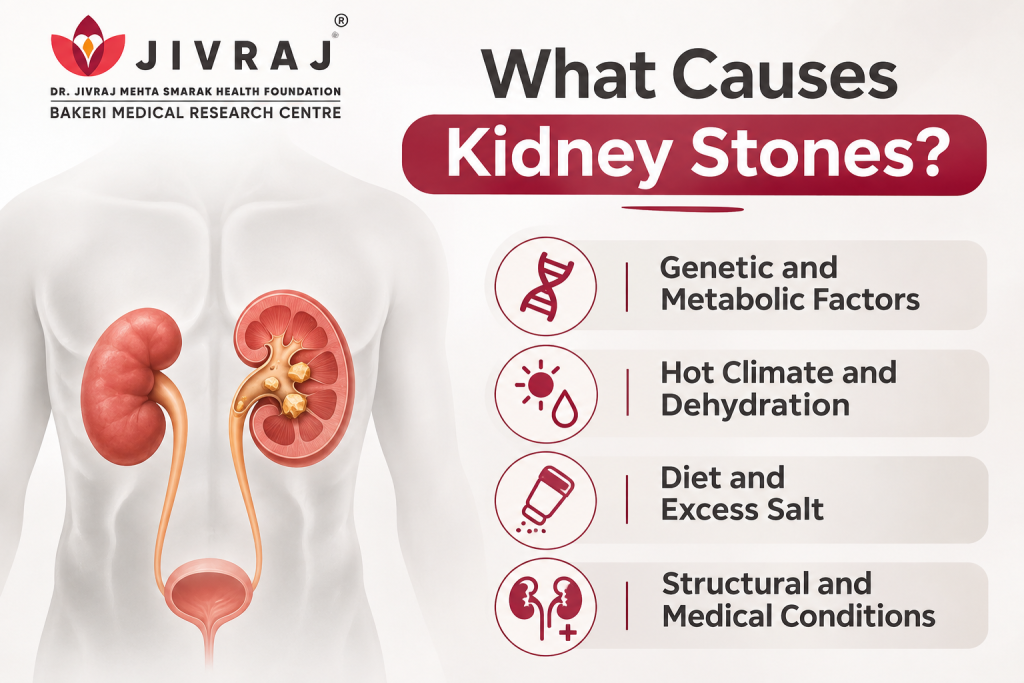
When stones appear at a young age, for example in the teens or twenties, genetic factors may play an important role. Certain inherited traits affect how the body handles minerals. People with such a tendency may form stones again within a few years if diet and fluid habits are not changed.
One metabolic cause is hypocitraturia, which means low citrate in the urine. Citrate helps prevent crystals from joining together, so a person with low citrate may form stones more easily than someone else eating the same food. A urine analysis helps the urologist identify such causes.
Hot Climate and Dehydration
Stones are seen more often in hot and humid regions such as Gujarat. Heavy sweating combined with low water intake makes urine concentrated, allowing minerals to settle. People who work outdoors or in hot conditions need to pay special attention to their fluid intake.
Diet and Excess Salt
According to Dr. Neel Patel, excess salt is one of the most common dietary contributors. Salt is not only what we add at the table. Processed food, maida items, bakery products, pickles, papad and ketchup contain a lot of hidden salt. Adding extra salt to buttermilk or salad adds to the load.
Foods rich in oxalate, such as spinach, tomatoes, okra (bhinda), almonds and cashews, may contribute to stones in people who are already prone to them. Such people may be advised to eat these foods in moderation rather than every day. Red meat and eggs are high in purines, which can raise uric acid levels and increase the risk of uric acid stones.
Structural and Medical Conditions
Some people have a structural problem in the kidney from birth. Others may develop a narrowing (stricture) in the urinary tube, for example after radiation treatment. In older men, an enlarged prostate can prevent the bladder from emptying fully. In each of these situations, urine stays stagnant and stones can form more easily.
Repeated urinary tract infections, which are more common in people with diabetes, may lead to infection related stones. A problem with the parathyroid glands, which help regulate calcium in the body, can lead to calcium stones.
What Are the Common Types of Kidney Stones?
Calcium oxalate stones: the most common type, accounting for the large majority of stones
Infection stones: associated with repeated urinary tract infections
Uric acid stones: associated with high purine diets and certain metabolic conditions
Knowing the type of stone helps the urologist plan treatment as well as prevention.
Many people feel intense pain but are unsure where it is coming from. Common kidney stone symptoms include:
Pain that begins in the back or the side of the waist
Pain that moves towards the lower abdomen and groin
In men, pain that may be felt towards the tip of the penis; in women, in the lower pelvic area
Cramping pain that comes in waves
Restlessness, with difficulty sitting or lying still
Pain along with fever, chills, vomiting or blood in the urine should be checked by a doctor without delay.
Can Frequent Painkiller Use Affect the Kidneys?
Some people take a painkiller every morning, whether or not they have a clear reason. Paracetamol taken in the correct dose is generally considered safe for most people. However, regular or prolonged use of certain painkillers from the NSAID group, including some combination tablets, may affect the kidneys.
When a patient comes with stone pain, the urologist chooses pain relief that is suitable for the kidneys and then looks for the cause. It is better to consult a doctor for repeated pain than to rely on self medication.
Kidney Stone Myths and Facts: Beer, Calcium and Protein Powder
Myth: Calcium tablets and milk products cause stones. Fact: Normal dietary calcium is not usually the main cause. Low fluid intake is a much bigger factor. People taking calcium supplements can discuss the right dose with their doctor.
Myth: Drinking beer prevents or removes stones. Fact: Beer increases urine output, so it may help pass a very small stone. However, beer contains purines and alcohol can dehydrate the body, so it is not a recommended way to prevent stones. Water, coconut water and lemon water are better choices.
Myth: Protein powder always harms the kidneys. Fact: The effect depends on a person’s activity level and actual protein requirement. Taking protein powder without matching physical activity can add load on the kidneys. Dr. Neel Patel suggests that regular users discuss periodic urine microalbumin testing with their doctor.
Testimonial
“Had a wonderful health checkup experience at Jivraj Mehta Hospital. The entire team is extremely supportive, helpful, and guides you through every single step. They made the entire process so easy and smooth that everything wrapped up in just around an hour! Highly recommended for their prompt and caring service.”
How Is Kidney Stone Treatment Planned in Ahmedabad?
Treatment depends on the size, type and location of the stone, whether it is in the kidney, ureter or bladder, and on the patient’s overall health. Evaluation usually includes urine tests and sonography, with further imaging when needed. Small stones may pass with medicines and fluids, while larger or obstructing stones may need a procedure.
For patients seeking kidney stone treatment in Ahmedabad, the urology services at Jivraj Healthcare include endoscopic procedures such as ureteroscopy, percutaneous nephrolithotomy (PCNL) and cystolitholapaxy for bladder stones. In the podcast, Dr. Neel Patel explains that laser based, minimally invasive techniques allow many stones to be treated through the natural urinary passage without an open incision, and many patients can go home after a short hospital stay. The treating team advises on the most suitable option after assessment, along with steps to lower the chance of stones returning.
What Is an Enlarged Prostate and What Symptoms Should Men Watch For?
The prostate gland is a walnut sized gland of the male reproductive system, located just below the urinary bladder and surrounding the urine passage. Much like hair turning grey, the prostate tends to enlarge gradually as men age, especially after 50. In most men this is a non cancerous, age related enlargement, but in some cases prostate symptoms can be linked to prostate cancer, which is why evaluation matters.
Common enlarged prostate symptoms include:
Delay in starting urine
A weak urine stream compared with earlier years
Waking up more often at night to pass urine
Urine flow that stops and starts
Dribbling, or a stream that sprays and soils clothes or the toilet seat
Many older men hesitate to talk about these problems. Family members can gently ask fathers, grandfathers or uncles if they notice such signs and encourage a consultation. Hormonal changes at this age may also affect sexual health, and men can discuss these concerns openly with their urologist.
How Are Prostate Problems Diagnosed and Treated?
The IPSS (International Prostate Symptom Score) is a short questionnaire that helps measure the severity of urinary symptoms. A low score generally suggests mild symptoms, while a higher score is a reason to consult a urologist. The doctor may then perform a clinical examination and sonography to assess the prostate.
The PSA (Prostate Specific Antigen) blood test can help in the early detection of prostate cancer. Dr. Neel Patel suggests that men above 50 to 55 discuss periodic PSA testing with their doctor. Early symptoms are often managed with medicines. When surgery is required, options include endoscopic procedures such as transurethral resection of the prostate (TURP), performed through the urinary passage without an external incision. Patients looking for prostate treatment in Ahmedabad can consult the urology team at Jivraj Healthcare for an assessment.
Which Warning Signs of Kidney Problems Need Prompt Medical Attention?
Contact a urologist or nephrologist promptly if you notice:
Blood in the urine
Pus in the urine or persistently frothy urine
A noticeable drop in daily urine output
Puffiness below the eyes
Swelling in both feet that keeps returning
These signs do not always mean a serious condition, but they should be evaluated so that any problem can be identified early.
How Can You Support Kidney Health in Daily Life?
Drink enough fluids: for people with healthy kidneys, Dr. Neel Patel suggests around 3 to 3.5 litres of total fluids a day. People with heart or kidney conditions should follow their doctor’s advice on fluid limits.
Reduce salt: avoid adding extra salt and limit packaged and bakery food.
Balance your diet: if you are prone to stones, eat high oxalate foods in moderation and limit red meat.
Choose seasonal vegetables and include more plant based meals.
Stay active: around 30 to 45 minutes of exercise most days supports overall health.
Use painkillers only when needed and at the right dose.
Get regular health checkups, especially after 40.
Urology Care at Jivraj Healthcare, Ahmedabad
Patients looking for a urology hospital in Ahmedabad can enquire about the services available at Jivraj Healthcare. Beyond stones and prostate care, the urology department also handles urinary tract infections, bladder tumours (TURBT), urethral stricture (optical internal urethrotomy), stress urinary incontinence and laparoscopic urological surgery. Investigations such as uroflowmetry and urodynamic studies help assess how well the bladder is working.
The right treatment is decided after assessment by the urology team. Appointments can be booked with Dr. Neel Patel.
Taking the Next Step for Kidney and Prostate Health
The kidneys filter waste from the blood, release hormones that help produce hemoglobin and work closely with many other organs, so they deserve regular care. Most kidney stone and prostate problems are manageable when identified early. Symptoms that keep returning are worth a proper evaluation rather than repeated home remedies or painkillers, and older family members may need a gentle push to speak up.
Jivraj Healthcare in Ahmedabad brings diagnosis, endoscopic treatment and follow up care for urinary conditions under one roof, so patients can move from first consultation to treatment without being referred elsewhere.
Frequently Asked Questions About Kidney Stones and Prostate Problems
When should I see a urologist in Ahmedabad?
Consider a consultation if you have severe back or side pain, blood or pus in the urine, burning while passing urine, reduced urine output, a weak stream or frequent urination at night.
How can I tell if back pain is from a kidney stone?
Stone pain usually starts in the side or back just below the ribs, comes in waves and spreads towards the groin. Muscular back pain, on the other hand, usually changes with movement or posture. A urine test and sonography can confirm the cause.
Can kidney stones come back after treatment?
Yes, stones can recur, especially in people with a genetic or metabolic tendency. Urine analysis and changes in diet and fluid intake can help lower the risk.
Does drinking beer help with kidney stones?
No. Any short term rise in urine output does not make up for the extra purines and fluid loss that come with alcohol. Plain water spread through the day is the simplest and most reliable habit for stone prevention.
Do calcium tablets or milk products cause kidney stones?
Usually not. Calcium taken with regular meals can actually bind oxalate in the gut and reduce the amount that reaches the kidneys. If you take calcium supplements, ask your doctor whether the dose and timing suit you.
Do all kidney stones need surgery?
No. Many small stones pass on their own with medicines and fluids. A procedure is usually considered when a stone is large, blocks the flow of urine, causes repeated pain or comes with an infection.
Can prostate enlargement be treated without surgery?
In many cases, yes. Mild to moderate symptoms are often managed with medicines and simple changes such as drinking less fluid late in the evening and cutting down on tea, coffee and alcohol. Surgery is usually considered when symptoms are severe or medicines stop helping.
Where can I consult a urologist for kidney stone and prostate treatment in Ahmedabad?
You can call Jivraj Healthcare on +91 79 2663 6363 or send a WhatsApp message to +91 63571 88191 to book an appointment with the urology department.