

Blog

Title Image

Monsoon Health Guide: Food Safety Tips and How to Boost Your Immunity

Home  /  Blog   /  Monsoon Health Guide: Food Safety Tips and How to Boost Your Immunity
Monsoon Health Guide: Food Safety Tips and How to Boost Your Immunity
Share At:
Google AI ChatGPT Grok Perplexity

Listen Article

The monsoon is one of the most loved seasons in Ahmedabad. The cool breeze and fresh rain bring welcome relief after the long summer heat, and the whole city feels lighter once the first showers arrive. Yet behind this pleasant change, the rainy season also creates the perfect conditions for germs to spread. Contaminated water, damp surroundings and weaker digestion make stomach infections and seasonal illnesses far more common during these months, which is why hospitals across the city see a steady rise in such cases every monsoon.

In daily practice, we notice that most monsoon illnesses are not caused by the rain itself, but by small lapses in everyday habits. A glass of unsafe water, a tempting plate of roadside food, or simply staying in damp clothes too long can be enough to invite infection. The encouraging part is that these same habits, when corrected, become your strongest protection.

The good news is that staying healthy in the monsoon is largely in your hands. With a few simple food safety habits and some easy steps to strengthen your immunity, you and your family can enjoy the season without falling ill. This guide brings together both, practical food safety tips and immunity boosting advice, so you can stay protected from the first shower to the last, no matter your age or daily routine.

Need Assistance? Start a Chat on WhatsApp!
WhatsApp WhatsApp

Why Stomach Infections Rise During the Monsoon

During the rainy season, humidity and stagnant water allow bacteria, viruses and fungi to multiply quickly. Water sources can easily get contaminated, and food spoils faster in the damp air. At the same time, our digestion tends to slow down in this weather, making the stomach more sensitive. Together, these factors lead to a sharp rise in waterborne and foodborne illnesses such as typhoid, gastroenteritis, jaundice and food poisoning. Knowing why this happens is the first step to preventing it.

Children and elderly family members are especially vulnerable, as their bodies fight off infection less easily. People with existing health conditions such as diabetes also need to be extra careful during these months. This is why monsoon care should never be treated as an afterthought. A little planning at home, in the kitchen and in daily routine protects everyone under your roof and saves the family from avoidable illness, missed work and missed school.

Common Monsoon Illnesses to Watch Out For

Before looking at prevention, it helps to know what you are protecting against. A handful of illnesses become far more common once the rains begin, and recognising them early makes treatment easier.

  • Waterborne infections: typhoid, cholera and jaundice spread mainly through contaminated water and food.
  • Stomach and digestive trouble: gastroenteritis and food poisoning cause vomiting, diarrhoea and stomach pain.
  • Mosquito borne fevers: dengue and malaria rise as stagnant rainwater becomes a breeding ground.
  • Viral fevers and colds: common in the changing weather, spreading quickly within families.

Most of these illnesses are preventable with safe food and water habits and a strong immune system, which is exactly what the steps below focus on.

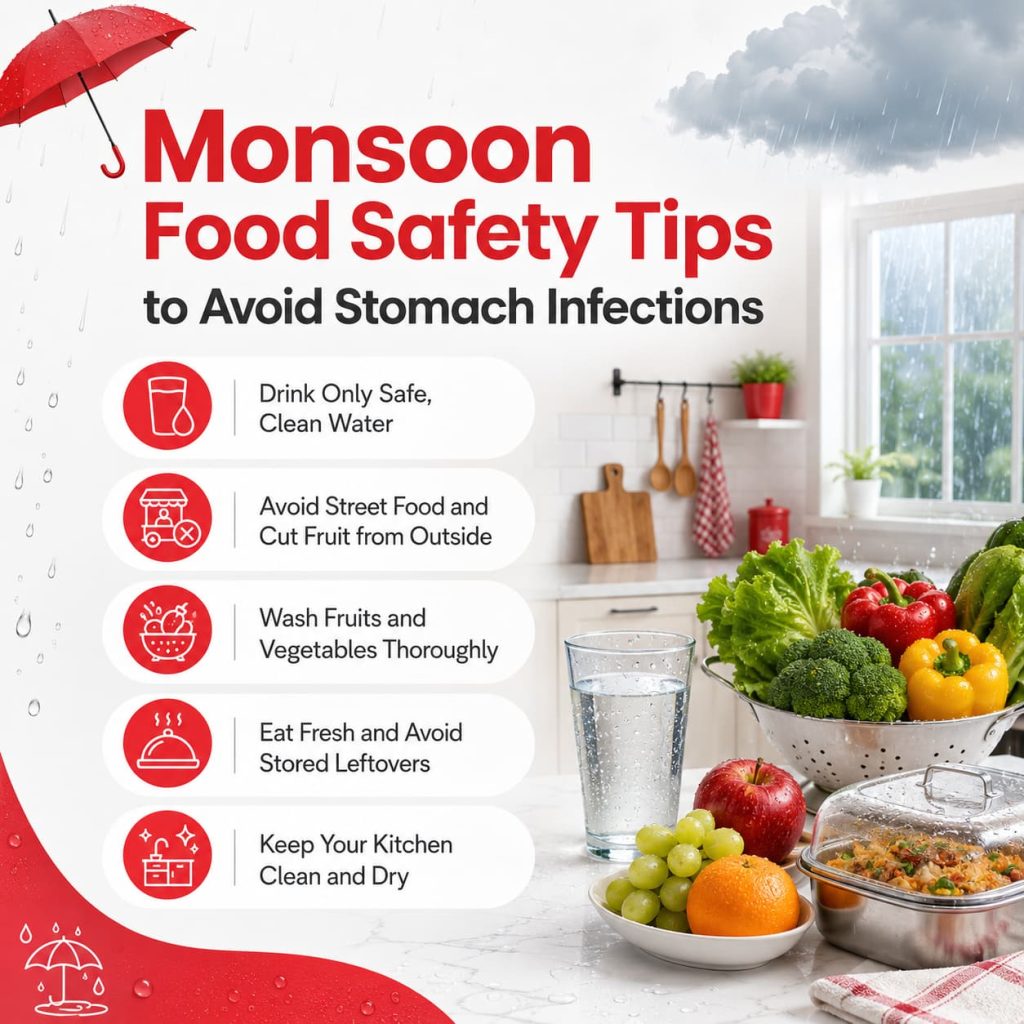
Monsoon Food Safety Tips to Avoid Stomach Infections

Most monsoon stomach troubles begin with what we eat and drink. These straightforward habits go a long way in keeping infections away.

Drink Only Safe, Clean Water

Contaminated water is the leading cause of monsoon illness. Always drink boiled, filtered or purified water, and be cautious with water served outside the home. Avoid ice from unknown sources, as it is often made from untreated water. Keeping a bottle of safe water with you when stepping out is a simple, effective habit.

Avoid Street Food and Cut Fruit from Outside

As tempting as roadside snacks are during the rains, monsoon is the riskiest time for street food. Open food is easily exposed to flies, dust and contaminated water. Pre cut fruits and salads left in the open are especially risky. Enjoying freshly prepared food at home is the safest choice this season.

Wash Fruits and Vegetables Thoroughly

Leafy vegetables and fresh produce can carry mud, germs and tiny insects during the monsoon. Wash them well under clean running water, and where possible soak them briefly in salt water before cooking. Cooking vegetables properly rather than eating them raw further lowers the risk of infection.

Eat Fresh and Avoid Stored Leftovers

Food spoils much faster in humid weather, even inside the fridge. Try to cook only what you need and eat it fresh. Avoid keeping cooked food for long hours, and always reheat thoroughly before eating. When in doubt about freshness, it is safer to throw it out.

Keep Your Kitchen Clean and Dry

A damp kitchen is a breeding ground for germs. Keep cooking surfaces, utensils and storage areas clean and dry. Cover food at all times to protect it from flies and insects, and store dry ingredients in airtight containers to prevent fungus and moisture damage.

Monsoon Food Safety Tips to Avoid Stomach Infections
ENT Surgery & Treatment

How to Boost Your Immunity This Monsoon

Safe food keeps germs out, while a strong immune system helps your body fight off whatever does get in. The monsoon is the ideal time to give your natural defences a little extra support through simple daily habits.

Eat Immunity Building Foods

Your plate is one of your strongest tools against illness. Include foods that naturally support immunity:

  • Seasonal fruits and vegetables rich in vitamins
  • Foods high in vitamin C such as citrus fruits and amla
  • Everyday immunity helpers like ginger, garlic, turmeric and tulsi
  • Warm, freshly cooked, home made meals that are easy to digest

Warm soups, herbal teas and lightly spiced food are not just comforting in the rains, they also help keep your system strong.

Stay Hydrated the Right Way

People often drink less water in the monsoon because they feel less thirsty, but staying hydrated remains essential. Choose warm or room temperature water, herbal teas and clean fluids over cold drinks. Good hydration helps flush out toxins and supports your body’s natural defences.

Keep Moving and Rest Well

Regular light exercise, even indoors, keeps your body active and your immunity strong during the rainy season. Equally important is good sleep, as the body repairs and strengthens itself during rest. Aim for steady, quality sleep each night to help your immune system stay ready.

Maintain Hygiene and Stay Dry

Simple hygiene habits prevent many infections. Wash your hands often, especially before eating, and dry yourself promptly if you get wet in the rain. Staying in damp clothes invites colds and skin infections. Keeping your surroundings dry and clean also reduces mosquito breeding, lowering the risk of seasonal fevers.

Avoid Habits That Weaken Immunity

Just as some habits build immunity, others quietly weaken it. During the monsoon, try to limit excess sugar, oily and fried foods, and heavy outside meals that burden digestion. Skipping meals, poor sleep and constant stress also lower your body’s resistance. Being mindful of these everyday choices keeps your natural defences working at their best through the season.

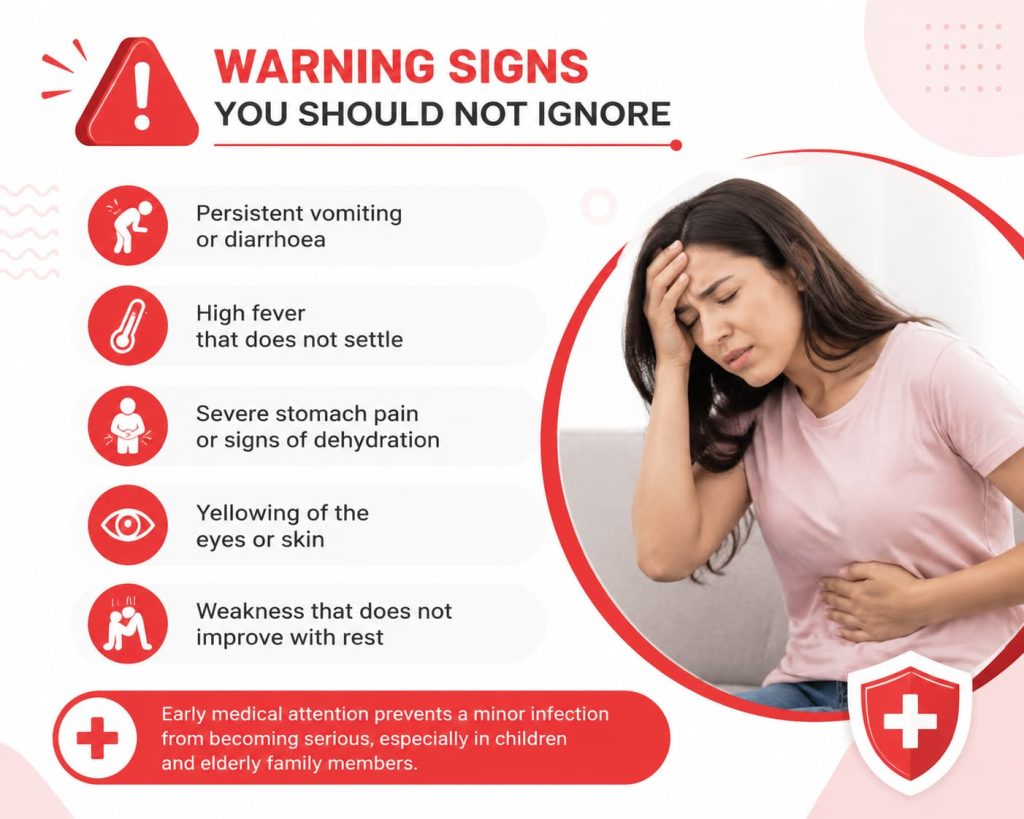
Warning Signs You Should Not Ignore

Despite the best care, infections can sometimes take hold. See a doctor promptly if you or a family member experiences:

  • Persistent vomiting or diarrhoea
  • High fever that does not settle
  • Severe stomach pain or signs of dehydration
  • Yellowing of the eyes or skin
  • Weakness that does not improve with rest

Early medical attention prevents a minor infection from becoming serious, especially in children and elderly family members.

Warning Signs You Should Not Ignore

Stay Healthy This Monsoon with Dr. Jivraj Mehta Hospital

At Dr. Jivraj Mehta Hospital, we are committed to keeping families in Ahmedabad healthy through every season. Our experienced team is ready to help with the timely diagnosis and treatment of monsoon related illnesses, from stomach infections and waterborne diseases to seasonal fevers. If you or a loved one feels unwell during the rainy season, our doctors are here to provide trusted, compassionate care when you need it most.

Need Help?
Call It’s Quick!

Your Quick Monsoon Health Checklist

Keep these simple habits in mind through the season:

  • Drink only boiled, filtered or purified water.
  • Avoid street food and pre cut fruits from outside.
  • Wash and cook vegetables well, and eat fresh meals.
  • Include immunity boosting foods in your diet.
  • Stay hydrated, active and well rested.
  • Wash hands often and stay dry.
General Medicine

Frequently Asked Questions

Why do stomach infections increase during the monsoon?

Humidity and contaminated water let germs multiply quickly, and food spoils faster. Our digestion also slows in this weather, making the stomach more sensitive. Together these factors raise the risk of waterborne and foodborne infections.

Is it safe to eat street food during the monsoon?

It is best avoided. Open street food is easily exposed to flies, dust and contaminated water, making it the riskiest choice this season. Freshly prepared home cooked food is far safer for you and your family.

What foods help boost immunity in the rainy season?

Seasonal fruits and vegetables, vitamin C rich foods like citrus and amla, and natural helpers such as ginger, garlic, turmeric and tulsi all support immunity. Warm, freshly cooked home meals are easiest to digest and most protective.

How much water should I drink during the monsoon?

Even if you feel less thirsty, keep drinking enough clean water through the day. Choose boiled, filtered or purified water, and prefer warm or room temperature fluids over cold drinks to support digestion and immunity.

When should I see a doctor for a monsoon illness?

See a doctor if you have persistent vomiting or diarrhoea, a high fever that does not settle, severe stomach pain, signs of dehydration, or yellowing of the eyes or skin. Early care is especially important for children and the elderly.

<< 1 >>


Enjoy the Monsoon, Stay Healthy

The rainy season is meant to be enjoyed, not feared. With safe eating habits and a strong, well supported immune system, you can welcome the monsoon while keeping illness at bay. A little awareness today protects your whole family through the season.

If you or a family member feels unwell this monsoon, do not wait. Timely care makes all the difference.

Appointments and Consultation: Call +91-79-26636363 to consult our doctors at Dr. Jivraj Mehta Hospital, Ahmedabad.