

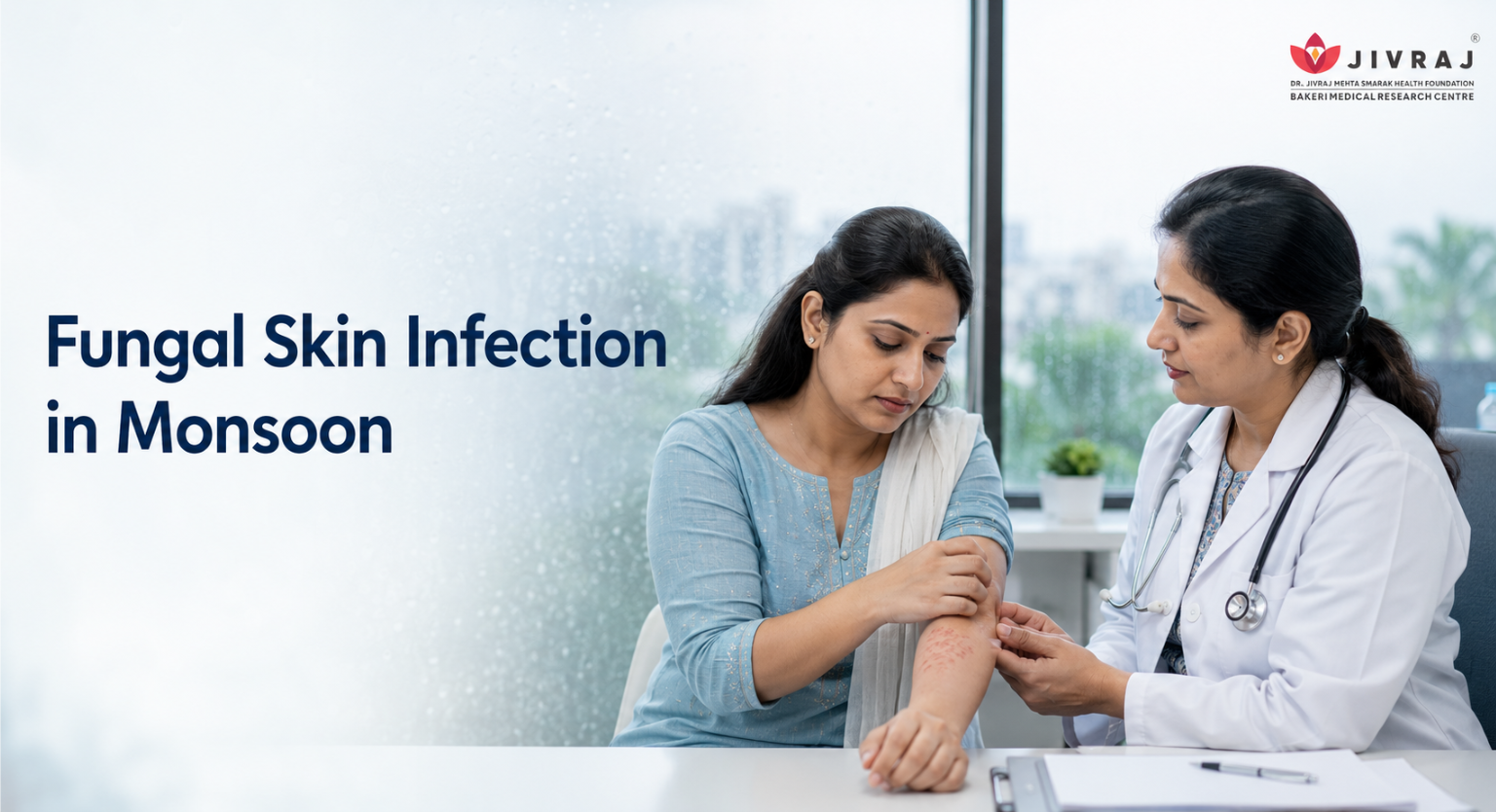
Skin Infection in Rains:
This article explains why fungal skin infection in monsoon becomes so common, its symptoms and causes, and how to prevent and treat it. The goal is to help readers in Ahmedabad manage itching, rashes, and skin irritation during the rainy season and know when to seek proper medical care at the General Medicine department of Dr Jivraj Mehta Hospital.
The monsoon brings cooler weather, but the constant dampness and humidity also make it the perfect season for fungal infections to spread. Wet clothes, sweaty skin folds, and moist footwear create ideal conditions for fungus to grow. This is why fungal skin infection in monsoon is one of the most common complaints during the rainy season. Understanding the causes, recognising the early symptoms, and knowing how to treat and prevent these infections can save you weeks of discomfort. This guide, supported by general medicine expertise, covers it all.
Why Do Fungal Infections Increase in Monsoon?
Fungus thrives in warm, moist environments, and the monsoon provides exactly that. Several factors make skin infection in rainy season far more common:
- High humidity keeps the skin damp for long periods
- Wet clothes and footwear trap moisture against the skin
- Sweating in humid weather, especially in skin folds
- Walking through dirty rainwater exposes skin to fungus and bacteria
- Poor drying of skin after bathing or getting wet
- Sharing towels or personal items spreads infection easily
These conditions allow fungus to multiply quickly, leading to itching and rashes in monsoon that can spread if left untreated.
Common Symptoms of Fungal Skin Infection
Recognising a fungal skin infection early makes treatment much easier. Common fungal skin infection symptoms include:
- Red, itchy, scaly patches on the skin
- Ring shaped rashes, often seen in ringworm
- Itching that worsens with sweat and humidity
- Peeling or cracking skin, especially between the toes
- Rashes in skin folds such as the groin, underarms, and under the breasts
- Discoloured or flaky patches
- A burning or stinging sensation
These infections commonly appear in areas that stay moist, and they can spread to other parts of the body or to other people. Early general medicine or dermatology evaluation prevents the infection from worsening.
Types of Fungal Skin Infections Common in Monsoon
Several fungal infection types in monsoon are frequently seen during the rainy season:
- Ringworm, which causes ring shaped, itchy patches on the body
- Athlete’s foot, a fungal infection between the toes causing itching and cracking
- Jock itch, affecting the groin area with red, itchy rashes
- Candida infections, appearing in warm, moist skin folds
- Nail fungus, causing discoloured, brittle nails
Each of these responds well to treatment when caught early, which is why timely medical advice matters.
How to Prevent Fungal Skin Infections in Monsoon?
Prevention is the best cure when it comes to fungal skin infection in monsoon. Follow these simple habits:
- Keep your skin clean and dry, especially after getting wet in the rain
- Change into dry clothes immediately if you get soaked
- Dry skin folds thoroughly after bathing
- Wear loose, breathable cotton clothing
- Choose open or breathable footwear that lets moisture evaporate
- Avoid walking barefoot through rainwater or wet public areas
- Do not share towels, socks, or personal items
- Use antifungal powder in areas prone to sweating
These steps significantly reduce your risk. However, if a rash appears and keeps spreading, do not ignore it or rely only on home remedies.
How Are Fungal Skin Infections Treated?
Most fungal infections are treated effectively with antifungal creams, powders, or oral medication prescribed by a doctor. The key is completing the full course of treatment, because stopping early often causes the infection to return. A general physician can assess the type and severity of the infection and recommend the right treatment, and refer you to a dermatologist if needed. Self medicating with random creams or steroid based ointments can actually make fungal infections worse, which is why proper medical guidance is important.
Client Speaks
“I recently visited the Health Checkup Department at Dr. Jivraj Mehta Hospital, and I must say, I am thoroughly impressed with the entire experience. From the moment I arrived, the staff was welcoming, professional, and made me feel at ease. The checkup process was smooth and well-organized, with clear instructions provided every step of the way. The medical team was attentive, knowledgeable, and took the time to answer all of my questions, ensuring I fully understood the procedures and results.
The facilities were clean, modern, and equipped with the latest technology, making me feel confident in the quality of care. I was especially appreciative of how efficient the process was, allowing me to complete all necessary tests without unnecessary wait times. Overall, the Health Checkup Department at Dr. Jivraj Mehta Hospital exceeded my expectations, and I would highly recommend it to anyone looking for comprehensive and reliable health checkup services.”
Rohan S -On Google
When Should You See a Doctor?
You should consult a general physician if you notice:
- A rash that keeps spreading despite home care
- Severe itching that disrupts sleep or daily life
- Rashes that ooze, blister, or become painful
- Infection that keeps coming back
- Fungal infection along with diabetes or a weakened immune system
- Rashes that do not improve after a week of basic care
Early evaluation at a general medicine doctor ensures the right diagnosis and prevents complications, especially for patients with underlying conditions.
How the General Medicine Department Can Help?
At the General Medicine department of Dr Jivraj Mehta Hospital, patients with skin infections receive careful evaluation from experienced internal medicine consultants who can identify the cause, prescribe the correct treatment, and manage any underlying conditions like diabetes that make infections harder to treat. When specialised skin care is needed, patients are guided to the right expert. For families in Ahmedabad, having a trusted general medicine team during monsoon means faster relief from stubborn itching and rashes in monsoon.
Skin Infections in Rains: FAQs
Why do fungal infections increase in monsoon?
Fungal infections increase in monsoon because fungus thrives in warm, moist conditions. High humidity, wet clothes, sweaty skin folds, and walking through rainwater all create the perfect environment for fungal skin infection in monsoon to develop and spread.
What are the early symptoms of a fungal skin infection?
Early symptoms include red, itchy, scaly patches, ring shaped rashes, itching that worsens with sweat, and peeling skin, especially between the toes or in skin folds. Recognising these early makes treatment much easier.
How can I get rid of a fungal infection in rainy season?
Most fungal infections are treated with antifungal creams, powders, or oral medication prescribed by a doctor. Keeping the skin clean and dry and completing the full course of treatment is essential to prevent it from returning.
Why does my fungal infection keep coming back?
Recurring infections often happen when treatment is stopped too early, when the skin stays damp, or when steroid creams are used incorrectly. A general physician can identify the reason and provide the correct treatment plan.
Are fungal skin infections contagious?
Yes, many fungal infections like ringworm and athlete's foot can spread through direct contact or by sharing towels, socks, and personal items. Avoid sharing these items and maintain good hygiene to prevent spreading it.
Can I use any cream from the pharmacy for a rash?
It is not advisable, because using the wrong cream, especially steroid based ones, can worsen a fungal infection. It is safer to get a proper diagnosis from a general medicine specialist before starting any treatment.
Are people with diabetes more prone to fungal infections?
Yes, people with diabetes or weakened immunity are more prone to fungal infections and may find them harder to treat. Such patients should seek medical care early rather than relying on home remedies.
How can I book a consultation for a skin infection?
You can book an appointment with the General Medicine department at Dr Jivraj Mehta Hospital through the hospital's online appointment system or by calling the OPD helpline for evaluation and treatment during the monsoon season.
General Physicians for Skin Injections in Ahmedabad, Gujarat
Fungal skin infection in monsoon is common, uncomfortable, and easy to underestimate, but with the right hygiene habits and timely treatment, it is very manageable. The key is to keep your skin dry, recognise early symptoms, and avoid self medicating with random creams that can make things worse. Dr Jivraj Mehta Hospital, through its dedicated General Medicine department, has long been a trusted name in Ahmedabad for comprehensive internal medicine care, offering experienced consultants, accurate diagnosis, and effective treatment for seasonal skin infections and other monsoon illnesses. Backed by modern facilities and a legacy of patient centred care, the hospital’s general physicians are ready to help you find lasting relief from stubborn itching and rashes in monsoon. If a rash keeps spreading or refuses to heal, do not wait it out. Book a consultation with the General Medicine team at Dr Jivraj Mehta Hospital and get the right care for healthy, comfortable skin this monsoon.