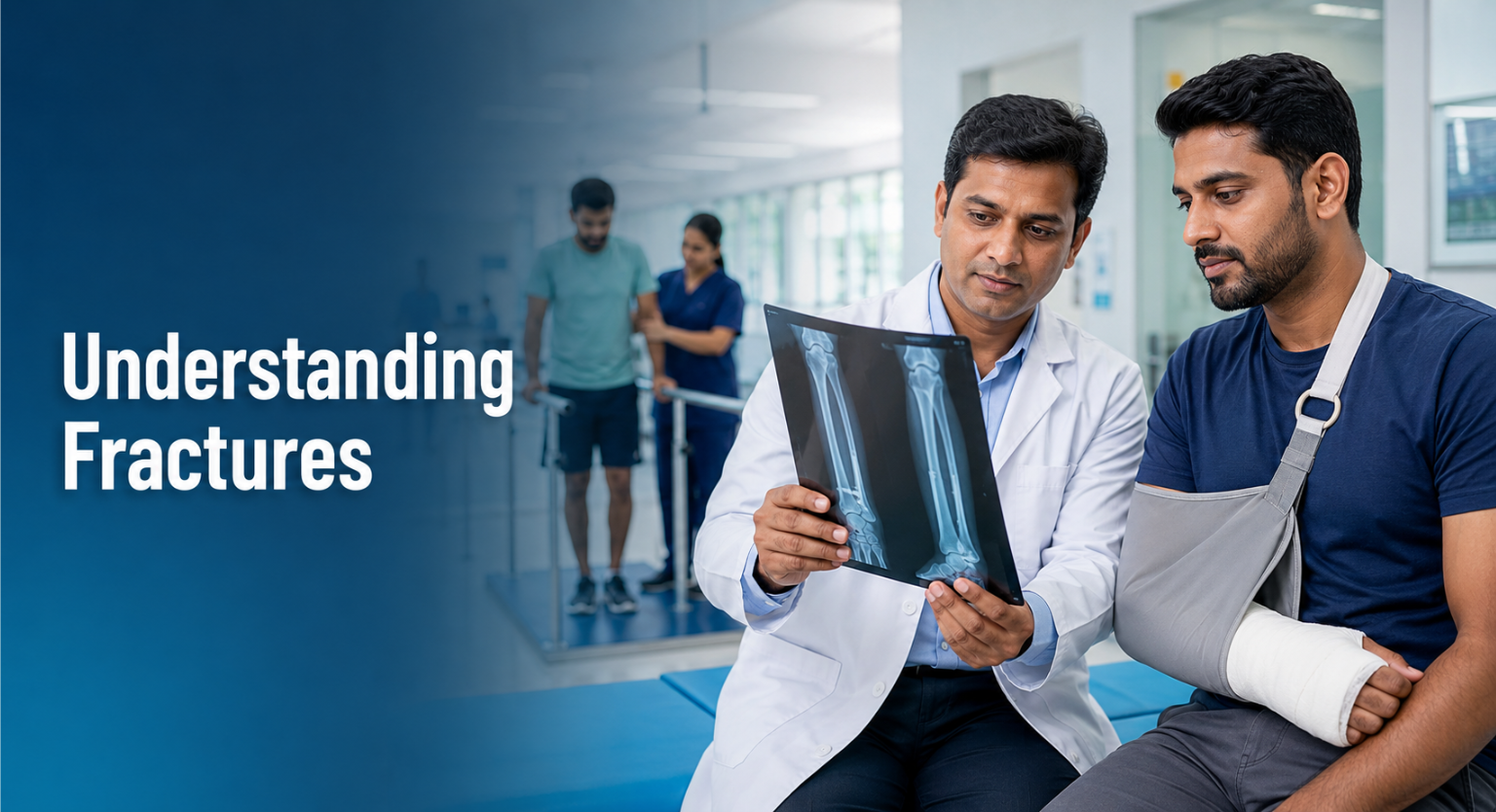
Understanding Fractures: Types, Treatment and Recovery in Ahmedabad
Home / Blog / Understanding Fractures: Types, Treatment and Recovery in Ahmedabad
August 14, 2020
Blog
Share At:
Listen Article
What a Fracture Really Means and Why Care Matters
A fracture, simply put, is a broken bone. It is one of the most common reasons people rush to a hospital, and it can happen to anyone, from a child falling while playing to an elderly person slipping at home. In more than two decades of orthopedic and trauma care in Ahmedabad, I have learned that what happens in the first hours after a fracture, and the quality of treatment that follows, often decides how well and how quickly a person recovers.
This guide explains the different types of fractures, how they are treated, what recovery involves, and when to seek emergency trauma care in Ahmedabad. Understanding these basics can help you or your loved ones act calmly and correctly when a fracture happens.
What Is a Fracture?
A fracture is a break in the continuity of a bone. It can range from a tiny hairline crack to a complete break where the bone splits into pieces. Fractures usually happen due to sudden force, such as a fall, a road accident or a sports injury. In some cases, weakened bones from conditions like osteoporosis can break with even minor stress. Whatever the cause, prompt and proper treatment is essential for the bone to heal correctly.
Not all fractures are the same, and knowing the type helps explain the treatment. These are the most common types we treat.
Simple (Closed) Fracture
In a closed fracture, the bone breaks but does not pierce the skin. It is the most common type and, with proper treatment, usually heals well.
Compound (Open) Fracture
In an open fracture, the broken bone breaks through the skin. This is a serious injury that needs emergency trauma care to prevent infection and ensure proper healing.
Hairline (Stress) Fracture
A hairline fracture is a small crack in the bone, often caused by repeated stress or overuse. It can be easy to miss, so persistent pain after activity should always be checked.
Comminuted Fracture
In a comminuted fracture, the bone breaks into several pieces. These complex fractures often require surgery and the skill of an experienced orthopedic trauma team.
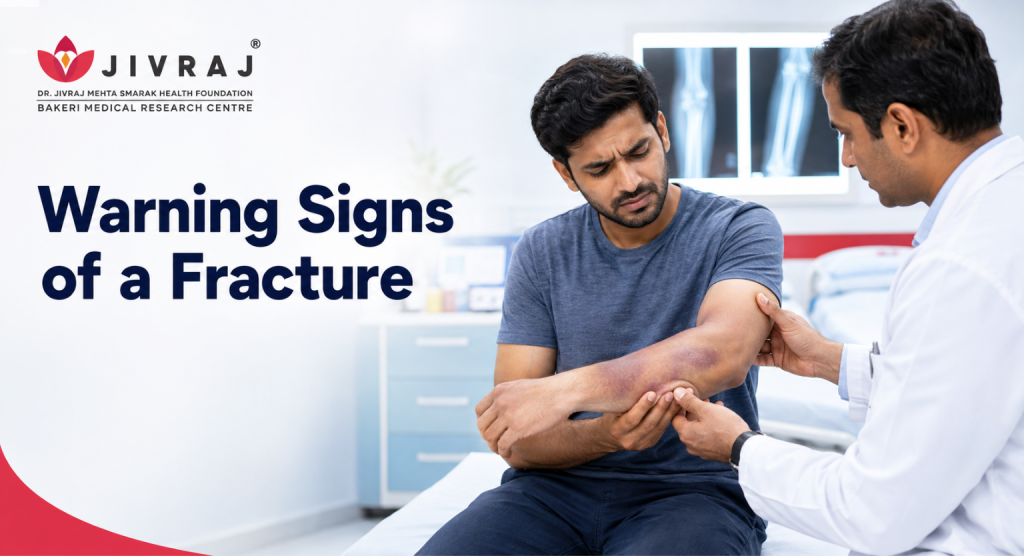
Warning Signs of a Fracture
Recognising a fracture quickly helps you seek the right care without delay. Common signs include:
Intense pain that worsens with movement or pressure
Swelling, bruising or tenderness around the injured area
Visible deformity or an unusual angle in the limb
Inability to move or bear weight on the affected part
A snapping or grinding sound at the time of injury
If you notice these signs after a fall or injury, seek medical care promptly. Quick evaluation prevents complications and supports better healing.
First Response: What to Do After a Fracture
The right first steps can protect the injury before you reach the hospital. Keep the injured part still and avoid moving it unnecessarily. Do not try to straighten a deformed limb. Applying a cold pack can reduce swelling, and supporting the area gently helps. Most importantly, reach an orthopedic or trauma centre as soon as possible. For serious or open fractures, calling for emergency help without delay is the safest choice.
How Fractures Are Treated
Fracture treatment depends on the type, location and severity of the break. The goal is always to align the bone correctly and hold it in place so it heals well.
Non Surgical Treatment
Many fractures heal with non surgical methods. The bone is set in the correct position and held with a cast, splint or brace while it heals naturally. This approach works well for many simple fractures and is supported by rest and follow up checks.
Surgical Treatment
More complex fractures may need surgery, where plates, screws or rods are used to hold the bone firmly in place. Open, comminuted or displaced fractures often require this approach. Modern surgical techniques allow precise fixation and support a stronger, more reliable recovery.
At Dr. Jivraj Mehta Hospital, fractures are treated by an experienced orthopedic and trauma team, supported by advanced imaging and a specially designed Ultra Clean Air, Class 100 operating theatre that reduces the risk of infection during surgery.
Recovery and Healing After a Fracture
Bone healing takes time and patience, and recovery varies with the type of fracture and the person’s age and health. In the early stage, rest and protecting the injury are key. As healing progresses, physiotherapy becomes important to restore strength, movement and flexibility to the affected part. Following your orthopedic team’s advice, attending follow up visits and completing your rehabilitation plan give the best long term results. A dedicated physiotherapy and rehabilitation team, like the one at Dr. Jivraj Mehta Hospital, helps patients regain full function and return to normal life.
Emergency and Trauma Care in Ahmedabad
Some fractures are true emergencies, and every minute counts. Open fractures, multiple injuries, or fractures from serious accidents need immediate expert care. Dr. Jivraj Mehta Hospital offers round the clock emergency and trauma care in Ahmedabad, with an experienced team ready to handle fractures, joint injuries and complex trauma at any hour. Quick, expert treatment in these situations protects both the limb and the patient’s long term recovery.
Why Choose Dr. Jivraj Mehta Hospital for Fracture and Trauma Care
When a fracture happens, you want a hospital you can trust to act fast and care well. Dr. Jivraj Mehta Hospital brings together everything needed for complete fracture and trauma care.
24 hour emergency and trauma care: expert help available at any hour.
Experienced orthopedic trauma team: handling simple and complex fractures.
Advanced imaging and diagnostics: for accurate assessment and treatment planning.
Ultra Clean Air, Class 100 operating theatre: reducing infection risk during surgery.
Dedicated physiotherapy and rehabilitation: supporting full recovery.
Cashless treatment for insured patients: making quality trauma care accessible in Ahmedabad.
With a legacy of trusted care and NABH and NABL accreditation, the hospital delivers prompt, expert and compassionate care when it matters most.
While not every fracture can be avoided, many can be prevented with a few sensible habits, especially for older adults and those with weaker bones. Simple steps go a long way in keeping your bones strong and reducing the risk of falls:
Eat a balanced diet rich in calcium and vitamin D for bone strength
Stay physically active with weight bearing exercise to keep bones healthy
Keep your home well lit and free of clutter to prevent falls
Use proper footwear, especially on wet or slippery surfaces
Get bone health checked if you are older or have had fractures before
These small precautions are particularly valuable for elderly family members, who are more prone to fractures from minor falls. Protecting bone health today prevents painful injuries tomorrow.
Frequently Asked Questions
How long does a fracture take to heal?
Healing time depends on the type and location of the fracture, and on the patient's age and health. Many simple fractures heal over several weeks, while complex or larger bone fractures take longer. Children generally heal faster than older adults. Following your orthopedic team's advice, protecting the injury and completing physiotherapy all support timely healing. Regular follow up visits help ensure the bone is healing correctly and recovery stays on track.
Do all fractures need surgery?
No. Many fractures heal well without surgery, using a cast, splint or brace to hold the bone in position while it heals naturally. Surgery is usually needed for open, displaced or complex fractures, where plates, screws or rods hold the bone firmly. The right approach depends on the specific injury, and your orthopedic specialist will recommend the safest, most effective option after a careful evaluation.
What should I do immediately after a fracture?
Keep the injured part still and avoid moving it unnecessarily, and do not try to straighten a deformed limb. A cold pack can help reduce swelling, and gentle support protects the area. Most importantly, reach an orthopedic or trauma centre quickly. For open or serious fractures, or injuries from major accidents, call for emergency help without delay, as fast expert care leads to the best recovery.
When is a fracture a medical emergency?
A fracture is an emergency when the bone pierces the skin, when there are multiple injuries, or when it results from a serious accident or fall. Severe pain, heavy bleeding, numbness or an obviously deformed limb also need immediate care. In these situations, quick treatment protects the limb and prevents complications. Dr. Jivraj Mehta Hospital provides 24 hour emergency and trauma care in Ahmedabad for exactly such situations.
Can physiotherapy help after a fracture?
Yes. Physiotherapy is an important part of recovery after many fractures. Once the bone has healed enough, guided exercises help restore strength, movement and flexibility to the affected area, which may have weakened during healing. A structured rehabilitation plan helps you return to normal activities safely and reduces the risk of long term stiffness. A dedicated physiotherapy team supports patients through each stage of this recovery.
A fracture can be a frightening experience, but with prompt, expert care and proper recovery, most people heal well and return to their normal lives. Knowing what to do and where to go makes all the difference in those first crucial hours.
If you or a loved one suffers a fracture or injury, our experienced orthopedic and trauma team at Dr. Jivraj Mehta Hospital is ready to help, around the clock.
24 Hour Emergency and Trauma Care: Call +91-79-26636363 to reach Dr. Jivraj Mehta Hospital, Ahmedabad.







 Chat Now!
 Call Now!