
Food Poisoning in Rains:
This article explains the common causes of loose motion and vomiting in monsoon, how to manage mild cases at home, and the warning signs that mean you should rush to a hospital. The goal is to help families in Ahmedabad handle stomach infections safely and know exactly when to seek expert care at the General Medicine department of Dr Jivraj Mehta Hospital.
The rainy season is the peak time for stomach infections. In Ahmedabad, where heavy monsoon rains often affect water quality and street food hygiene, contaminated water, unhygienic street food, and reduced food quality after heavy rains all lead to a sharp rise in loose motion and vomiting in monsoon. While many cases are mild and settle with simple home care, some can lead to dangerous dehydration if ignored. Knowing how to manage symptoms at home, and more importantly, when to rush to a doctor, can protect you and your family. This guide, backed by the general medicine expertise of Dr Jivraj Mehta Hospital in Ahmedabad, breaks it down clearly.
What Causes Loose Motion and Vomiting in Monsoon?
Loose motion and vomiting during the rainy season are usually caused by infections of the stomach and intestines. Common causes include:
- Contaminated water that carries bacteria, viruses, or parasites
- Street food and cut fruits exposed to flies and poor hygiene
- Food poisoning from stale or improperly stored food
- Viral gastroenteritis, a common stomach infection in monsoon
- Bacterial infections like those causing typhoid or cholera
- Poor hand hygiene before eating
These infections irritate the digestive system, leading to diarrhoea, vomiting, stomach cramps, and sometimes fever. Because dehydration can set in quickly, early awareness is important, and severe cases need general medicine evaluation.
Common Symptoms to Watch For
Along with loose motion and vomiting symptoms, you may also notice:
- Stomach cramps or pain
- Nausea and repeated vomiting
- Watery or frequent stools
- Fever and weakness
- Loss of appetite
- Signs of dehydration such as thirst, dry mouth, and reduced urination
Mild symptoms often improve within a day or two, but persistent or severe symptoms need medical attention from a general physician.
Home Care for Mild Cases
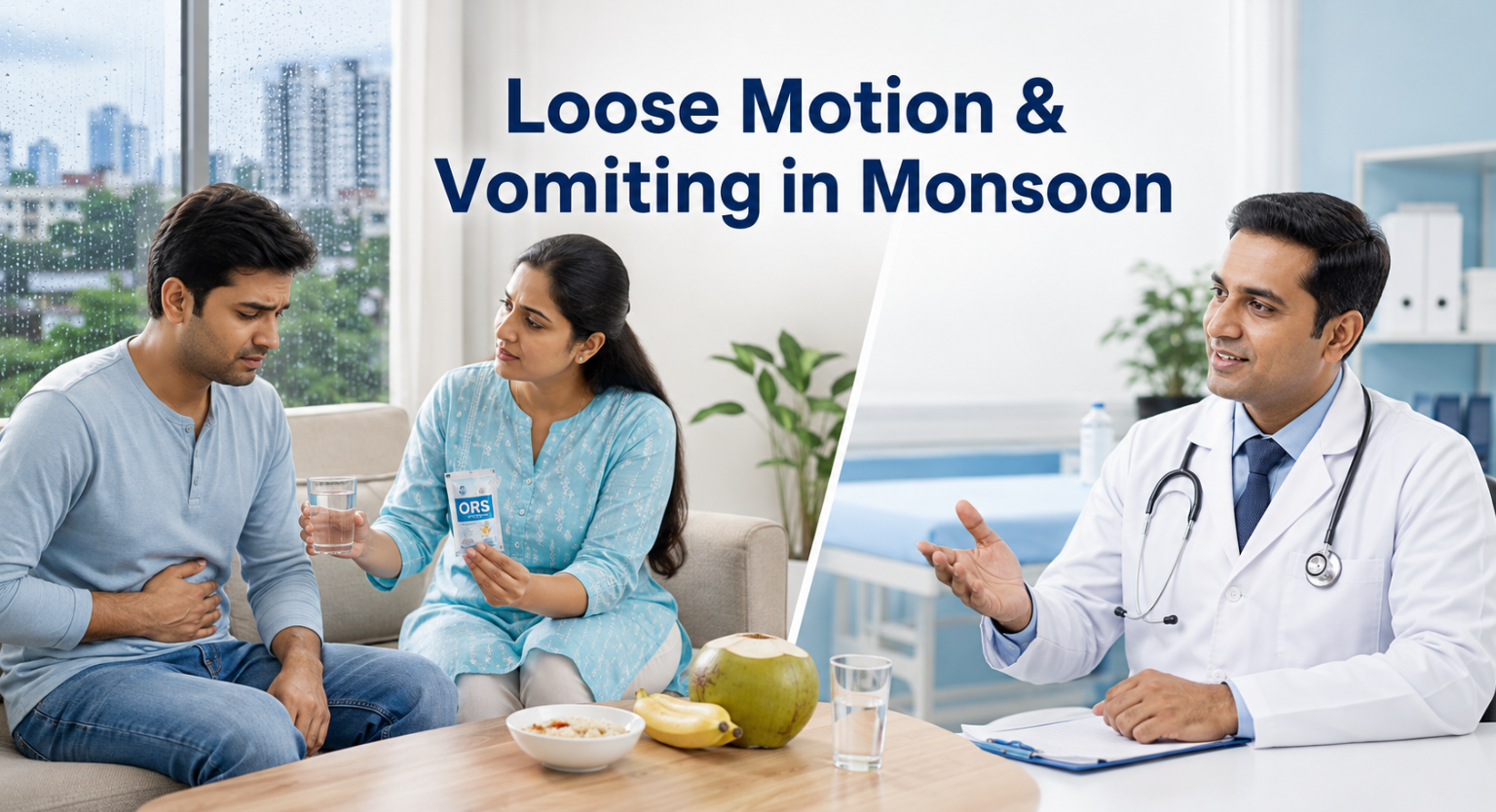
For mild loose motion and vomiting in monsoon, home care focuses on preventing dehydration and letting the body recover. Helpful steps include:
- Drink ORS (Oral Rehydration Solution) frequently to replace lost fluids and salts
- Sip water, coconut water, and clear soups throughout the day
- Eat light, easily digestible food like khichdi, rice, curd, and bananas
- Avoid oily, spicy, and street food until you recover
- Rest to help your body fight the infection
- Avoid dairy other than curd if it worsens symptoms
- Maintain hand hygiene to prevent spreading the infection
Home care is usually enough for mild cases. However, ORS is the most important step, as it prevents dangerous dehydration. If symptoms do not improve within a day or two, medical care is needed.
When Should You Rush to the Hospital?
This is the most important part. You should rush to a hospital or consult a general physician in Ahmedabad immediately if you or a family member has:
- Severe or continuous vomiting that prevents keeping fluids down
- Signs of severe dehydration such as very little or no urination, sunken eyes, dizziness, or extreme weakness
- Blood in stool or vomit
- High fever along with loose motions
- Severe or persistent stomach pain
- Loose motion and vomiting lasting more than 2 days
- Symptoms in infants, young children, elderly patients, or pregnant women
- Confusion, drowsiness, or fainting
These are warning signs of serious infection or dangerous dehydration that cannot be managed at home. Immediate general medicine care, including IV fluids and proper testing, may be needed.
Testimonial
“I had a very good and satisfying experience at Jivraj Mehta Hospital. The doctors here are highly experienced and provide clear guidance with utmost care. The hospital environment is clean, well-organized, and efficiently managed by the administrative staff. The nursing team is extremely caring and attentive, ensuring patients feel comfortable throughout their stay. Overall, the patient care is excellent, and I truly appreciate the professionalism and compassion shown by the entire team. Highly recommended!“
Why Dehydration Is the Biggest Danger
The real risk with food poisoning in monsoon is not the infection itself but the rapid loss of fluids and salts. Dehydration can become serious very quickly, especially in children and the elderly. Signs like reduced urination, dry mouth, dizziness, and extreme tiredness should never be ignored. This is why ORS is so important at home, and why severe cases need urgent medical attention and IV fluids at a general medicine department.
How the General Medicine Department Can Help
At the General Medicine department of Dr Jivraj Mehta Hospital, patients with stomach infections receive prompt evaluation from experienced internal medicine consultants, along with on site testing to identify the exact cause, whether it is food poisoning, viral gastroenteritis, or a bacterial infection like typhoid. The department provides rehydration therapy, IV fluids for severe cases, and the right medication to speed up recovery. For families across Ahmedabad, having a trusted general medicine team during monsoon means safe, timely care exactly when it is needed most, whether it is a mild infection or a case that needs urgent rehydration.
Loose Motion & Vomiting in Monsoon: Frequently Asked Questions
What causes loose motion and vomiting in monsoon?
Loose motion and vomiting in monsoon are usually caused by stomach infections from contaminated water, street food, food poisoning, and viral gastroenteritis. Poor hand hygiene and reduced food quality after rains also contribute.
How can I treat loose motion and vomiting at home?
For mild cases, drink ORS frequently, stay hydrated with water and clear soups, eat light food like khichdi and curd, avoid oily and street food, and rest. ORS is the most important step to prevent dehydration.
When should I rush to the hospital for vomiting and diarrhoea?
Rush to a hospital if there is severe or continuous vomiting, signs of dehydration, blood in stool or vomit, high fever, severe stomach pain, or if symptoms last more than 2 days. Symptoms in children and the elderly also need urgent care.
Why is dehydration dangerous during a stomach infection?
Dehydration is dangerous because the body rapidly loses fluids and salts through vomiting and diarrhoea. It can become serious quickly, especially in children and elderly patients, which is why ORS and timely medical care are so important.
What should I eat during loose motion and vomiting?
Eat light, easily digestible food such as khichdi, rice, curd, bananas, and clear soups. Avoid oily, spicy, and street food until you fully recover, and keep sipping fluids throughout the day.
How long does a monsoon stomach infection usually last?
Mild stomach infections often improve within one to two days with proper home care and hydration. If symptoms persist beyond this or worsen, you should consult a general physician for evaluation and testing.
Are children more at risk from loose motion and vomiting?
Yes, children are more vulnerable to dehydration and can deteriorate quickly. Any infant or young child with repeated vomiting, loose motions, or signs of dehydration should be evaluated by a doctor without delay.
Where can I get treatment for loose motion and vomiting in Ahmedabad?
You can get prompt evaluation, rehydration, and testing for a monsoon stomach infection at the General Medicine department of Dr Jivraj Mehta Hospital in Ahmedabad. Book an appointment through the hospital's online appointment system or by calling the OPD helpline for same day care during the monsoon season.
General Physician for Loose Motion and Vomiting
Loose motion and vomiting in monsoon are extremely common, and while most mild cases settle with simple home care and ORS, the key is knowing when the situation becomes serious. Dehydration is the biggest danger, and warning signs like continuous vomiting, blood in stool, or symptoms in children should never be ignored. Dr Jivraj Mehta Hospital, through its dedicated General Medicine department, has long been a trusted name in Ahmedabad for comprehensive internal medicine care, offering experienced consultants, rapid diagnostic testing, rehydration therapy, and prompt treatment for monsoon stomach infections. Backed by modern facilities and a legacy of patient centred care, the hospital’s general physicians are ready to help you and your family recover safely this monsoon. If loose motion and vomiting turn severe or do not improve, do not wait. Book a consultation with the General Medicine team at Dr Jivraj Mehta Hospital and get the timely care you need.